
Vascular Treatment
Single Telangiectasis
Single telangiectasis is one dilated surface capillary that has widened enough to see, usually a fine red thread on the cheek, nose or chin. Effective telangiectasia treatment works by heating the blood inside that vessel until the wall collapses and seals, using laser light, intense pulsed light or a fine high-frequency tip. Surrounding skin stays intact. Written for clinics and distributors comparing equipment, this page is educational, not medical advice.
What single telangiectasis actually is
A healthy capillary is invisible. So narrow that red blood cells pass single file. Our engineering archive puts it plainly: when the caliber enlarges under alcohol, estrogen, long-term corticosteroid use or chronic photoaging, the vessel becomes a visible bloodshot mark. Patients see one thread, or a dozen across the nose.
Histology backs up what the eye sees. Capillaries in the dermal papillae widen to roughly 0.1 to 1.0 mm, the range published for arterial-type telangiectasias in the StatPearls review on spider veins. Blue or purple vessels closer to 1 to 3 mm are venous and behave differently on the table.
These lesions turn up most often on lighter skin, typically Fitzpatrick I to III, and telangiectasia is a defining feature of rosacea. Confirm the diagnosis first. Lesions that bleed, grow or change shape need dermatological assessment and sometimes biopsy, and telangiectasias on the lips or oral mucosa with recurrent nosebleeds deserve a medical referral rather than a cosmetic appointment.
How laser and light close facial vessels
The whole field rests on one paper. In 1983 Anderson and Parrish published selective photothermolysis in Science: a pulse of selectively absorbed light, short enough to confine heat, damages the target and spares neighbouring tissue. Their demonstration used 577 nm on cutaneous microvessels. Every vascular device sold today is a variation on that idea.
The target chromophore is oxyhemoglobin, with absorption peaks recorded in our technical archive at 418, 542 and 577 nm. That is why green and yellow light hits blood hard. At 1064 nm absorption is weaker but penetration far deeper, and heated hemoglobin converts to methemoglobin, which soaks up 1064 nm much more strongly. The vessel becomes a better target as you heat it.
Pulse duration is the other lever. Thermal relaxation time is the interval a target needs to shed about 63 percent of its heat, so fine vessels want short pulses and fatter ones tolerate longer. What about 532 nm? Blood drinks it up, but our archive is blunt: green light scatters in the epidermis and can trigger pigment change.
Treatment protocol and what to expect
Plan on more than one visit. Fine facial vessels often respond quickly, and our archive notes that many close after one or two sessions, but that is an observation, not a promise. Results vary with vessel calibre, skin type, rosacea activity and sun habits. Space visits several weeks apart.
The endpoint you want is visible blanching or a subtle greying of the thread, with mild transient erythema. Push past that and you're into blistering territory. Downtime is short: redness for hours to a day or two, sometimes a fine crust where a contact tip was used.
Cooling deserves a caveat, not a blanket rule. Our technical notes say telangiectasia does not normally require aggressive epidermal cooling, and that heavy cooling can blunt the result during low-energy work on fine surface threads. Read that narrowly: it applies to Fitzpatrick I to III skin, no recent tan, modest fluence. For higher phototypes, sun-exposed skin, or any protocol where you raise energy, full epidermal cooling stays in place, for the reason in the darker-skin question below. Port wine stains and hemangiomas are the opposite case again, needing higher fluences with sapphire contact cooling. Treating those too? Read the nevus flammeus protocol page first.
- Confirm the diagnosis and rule out anything that needs a dermatologist first.
- Record Fitzpatrick type, recent sun exposure and photosensitising medication.
- Screen for pacemakers, defibrillators and other active implants before any high-frequency work.
- Run a test spot in a discreet area before treating the full field.
- Use wavelength-rated eyewear marked with optical density, per ANSI Z136.3.
Recommended Pmise equipment
No single machine covers everything. Match the tool to the lesion.
| Approach | Suits | Practical notes |
|---|---|---|
| IPL or E-Light, 585 to 1200 nm filter | Diffuse redness, many fine vessels, rosacea background | Broad spectrum reaches capillaries at several depths. Spots such as 10x10 mm, 8x40 mm and 15x60 mm cover a cheek quickly. |
| Long-pulse 1064 nm Nd:YAG | Discrete threads, thicker vessels, deeper targets | Small spot, adjustable pulse width, slower going. Our manuals list roughly 1 mm spots for fine facial vessels, 3 mm for larger ones. |
| High-frequency contact tip | Single stubborn vessels, cherry angiomas, small benign bumps | Focused current coagulates the vessel point by point through a 0.01 mm tip, and the coagulum usually sloughs within about a week. Different risk profile from light: excess current or long contact can leave a punctate atrophic mark, and our manuals list implanted pacemakers and defibrillators as a contraindication until cardiology clears the patient. |
For vessel-by-vessel work on the face, our high frequency for vessel diseases range fits tightest: 13.56 MHz, adjustable output, continuous and pulsed modes, and a 0.01 mm tip that spares skin either side of the vessel.
When redness is diffuse rather than linear, IPL or E-Light is the better buy. Our systems ship with filters at 530, 585 and 610 nm cut-on, all running to 1200 nm; 585 nm is the one built for red vessels.
For thicker or deeper facial vessels, look at the long-pulse 1064 nm platforms. Pulse width and spot size adjust, cooling is built in, and our parameter tables are stratified by Fitzpatrick type. A deeper comparison sits in our guide to treating vascular conditions with Nd:YAG lasers, with the clinical detail in facial telangiectasia and spider veins with laser.
Speccing a treatment room this quarter? Clinics can request the Fitzpatrick-stratified vascular parameter sheet, which lists starting settings by skin type, or book a live demonstration of a vascular handpiece before committing.
Aftercare and precautions
Aftercare is simple and people still get it wrong. Cool the area, keep it clean, skip the sauna and hard exercise for a couple of days, leave any crust alone. Sunscreen is not optional.
Complications differ by technology, so brief the patient on the device you will use.
Laser and IPL first. Our archive and the literature agree: pigment change in both directions, burns, blistering, crusting, swelling. Post-inflammatory hyperpigmentation is the one that most often turns a happy patient into an unhappy one, and it climbs with darker phototypes, recent tanning and aggressive fluence. Lower the energy, lengthen the pulse, test first. See Fitzpatrick skin types and laser settings.
High-frequency contact treatment carries a risk that list does not name. Current destroys tissue right where the tip touches, so excess power or a long contact can leave a small pitted or atrophic scar, and the risk compounds when the same point is treated repeatedly along the nasal ala or cheek. Published electrosurgery guidance points to the obvious defences: low power, the finest tip, brief bursts, one pass per point per session rather than stacking, and a test point somewhere inconspicuous first.
Active implants are the other high-frequency issue. Our device manuals list an implantable cardiac pacemaker or automatic defibrillator as a contraindication for high-frequency and RF equipment, and dermatologic electrosurgery references treat such patients as a case for cardiology assessment and modified technique, not a routine booking. Screen at consultation. Pacemaker, ICD or other active implant? Don't treat that day. Get cardiology clearance in writing, or use a light-based option.
Untreated rosacea brings the vessels back. Clearing them is a maintenance relationship with the patient, not a one-off sale.
Frequently Asked Questions
How many sessions does facial telangiectasia need?
Usually several, though a few small vessels can close in one or two. It depends on vessel count, vessel thickness, and whether rosacea keeps feeding new ones. Space visits a few weeks apart and reassess with photographs each time. Anyone promising total removal in one visit is overselling.
Is 532 nm or 1064 nm better for spider veins on the face?
For most practices, long-pulse 1064 nm. Blood absorbs 532 nm more strongly, but green light scatters in the epidermis and carries a higher pigment-change risk, which our archive flags directly. The 1064 nm wavelength penetrates further and suits more skin types. Keep 532 nm for very superficial threads on fair, untanned skin.
Can darker skin types be treated safely?
Yes, with care. Longer wavelengths, lower fluences, longer pulses, full epidermal cooling and a mandatory test spot are the working rules. Melanin competes for the light, so the margin between closing a vessel and burning the epidermis narrows as phototype rises. Hyperpigmentation is the main concern. Space sessions further apart.
Does a high-frequency device replace a vascular laser?
No, they solve different problems. A high-frequency tip is precise and economical for individual vessels, cherry angiomas and small skin excrescences, working point by point in contact. A laser or IPL covers area, treats diffuse redness and reaches deeper. Most clinics with a mixed vascular caseload own both, and the scar and implant cautions above apply only to the contact device.
Specifying a vascular line for your clinic or territory
Buying decisions here come down to case mix. Clinics can ask for the facial vessel treatment protocol pack, covering settings by phototype, endpoints and consent points. Distributors can request the vascular equipment quotation and configuration list, covering high-frequency vessel units, IPL and E-Light filter sets, long-pulse 1064 nm platforms, territory terms, training and spare parts.
Recommended Equipment
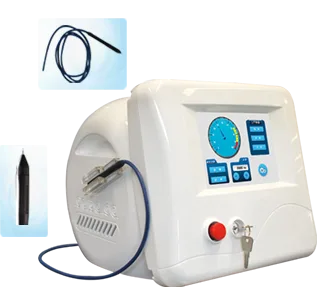
Pmise VF-05
Two working modes, Pulse and Continuous, guarantee more comfort and obvious results 0.01mm treatment Tip provides good e…
View details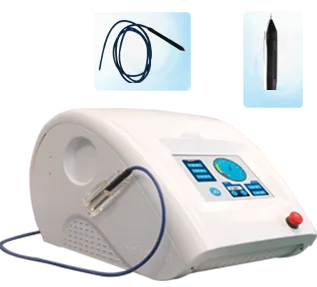
Pmise VF-06
Two working modes, Pulse and Continuous, guarantee more comfort and obvious results 0.01mm treatment Tip provides good e…
View details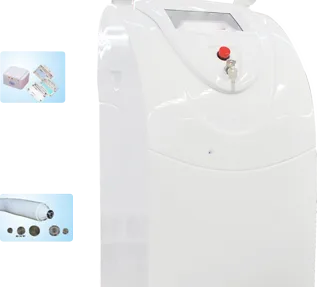
Pmise MF-06
1.LCD display, touch screen input, and friendly human-computer interface.2.IPL, RF and ND YAG laser are well united in o…
View details