
Pigment Treatment
Lentigo Treatment: 532nm Q-Switched Laser Protocol for Solar Lentigines
A lentigo is a flat, sharply bordered brown macule created by extra melanin sitting in the basal layer of the epidermis. Lentigo treatment with a 532nm Q-switched laser goes straight after that pigment, fragmenting melanin granules in nanoseconds so the debris darkens, crusts and sheds. Solar lentigines, the age spots people pick up on hands, shoulders and cheeks, respond well because the pigment stays shallow. Anything ambiguous gets diagnosed first.
What a lentigo actually is
The word covers two clinical pictures. Solar lentigines are the ones patients call age spots. Accumulated ultraviolet exposure produces them, and they favour skin the sun has punished most: hands, forearms, shoulders, upper chest, face, bald scalp. Size runs from millimetres to a couple of centimetres, colour from light tan to near black. They don't fade over winter, which is the fastest way to separate them from freckles. Our page on freckle removal and ephelides covers that comparison.
Lentigo simplex is the other picture, and our clinical archive records it plainly. Present from infancy or birth, often stable or reduced by adulthood. Macules of 1 to 2 mm, brown to black, regular in edge and colour. Scattered anywhere, including sites the sun never reaches. No seasonal change, no symptoms, no self-healing. Treatment logic is similar, the counselling is not, because sun never caused these.
Histology explains why light works. In solar lentigines the basal layer is hyperpigmented, keratinocytes proliferate and rete ridges elongate over solar elastosis, while melanocyte numbers stay normal or mildly raised. Our archive records the same core finding: melanin-producing cells increased in the basal layer. Pigment that shallow is easy for a green beam to reach.
This page is education for equipment buyers and clinical teams. It is not medical advice, and no substitute for diagnosis by a qualified clinician.
Solar lentigo, or something you must not laser
This matters more than any setting. Chronically sun-damaged skin is where lentigo maligna, the in-situ melanoma seen on the head and neck of older patients, likes to hide. It starts as a tan-brown macule, and it can sit beside or inside an ordinary solar lentigo. Pathologists call that a collision lesion.
Fire a Q-switched pulse into that and you destroy tissue a pathologist needed. Screen every lesion first. The American Academy of Dermatology's ABCDE checklist is the working standard:
- Asymmetry. One half unlike the other.
- Border. Irregular, scalloped or ill-defined.
- Colour. Mixed tan, brown or black, or patches of white, red or blue.
- Diameter. Usually over 6 mm at diagnosis, though melanomas can be smaller.
- Evolving. The spot looks unlike the others, or is changing.
Red flags too: itching, bleeding, a sore that heals and returns, a thickened spot. Any of those means dermoscopy and biopsy, not a laser. Train operators to refer, not guess.
How 532nm Q-switched light clears the pigment
The principle dates to 1983, when Anderson and Parrish published selective photothermolysis in Science. Pick a wavelength the target absorbs far better than its surroundings, deliver it faster than the target sheds heat, and damage stays put.
Melanin absorbs across a broad band, and absorption climbs as wavelength shortens. Our engineering archive puts it plainly: 532nm is preferentially taken up by red and brown chromophores and poorly by black and blue, while 1064nm behaves the other way round. A 532nm photon also carries twice the energy.
Depth is the other half of it. Our archive notes that light below 800nm preferentially heats melanin but scatters readily in the epidermis, while dermal pigment needs wavelengths above 800nm. Solar lentigines are epidermal. A beam that stops shallow is a feature here.
Pulse width finishes the job. Our Nd:YAG manuals specify pulse durations of roughly 6 to 8 ns, spot sizes adjustable from about 1 mm to 6 mm, and 1 to 5 Hz repetition. Energy lands faster than a melanosome can shed heat, so the granule fractures instead of cooking the tissue around it. Watch for the ashen whitening. That frost is your endpoint.
Broadband light is a legitimate alternative. Our archive lists intense pulsed light as first choice here, notes that E-light platforms behave like IPL once the radiofrequency is off, and suggests IPL first, then Q-switched 1064nm or 532nm. More on wavelength choice in our guide to treating pigmented lesions with Q-switched lasers.
Treatment protocol and what to expect
None of this is a prescription. Every parameter belongs to the treating clinician. Photograph before session one, in the same light every time.
| Item | Typical practice | Reasoning |
|---|---|---|
| Wavelength | 532nm, frequency-doubled Nd:YAG | Strong absorption by brown epidermal melanin |
| Pulse regime | Q-switched, nanosecond domain | Fragments melanosomes before heat spreads sideways |
| Spot size | Matched to the lesion | Lentigines can span centimetres, unlike freckles |
| Endpoint | Immediate ashen whitening, no blistering | Enough to fragment pigment, short of injury |
| Sessions | Usually several, varying by lesion and phototype | Reassess each pass, don't sell a fixed course |
| Interval | Several weeks apart | Crusting and redness settle first |
| Downtime | Darkening, then fine crusting that sheds | Crusts stay superficial when energy is correct |
| Higher-risk patients | Fitzpatrick IV to VI, recent tan, photosensitisers | Raised risk of post-inflammatory hyperpigmentation |
Clearance is gradual, and honesty sells better than optimism. One independent clinician report in our archive describes solar lentigines treated with 532nm across four sessions, and hand pigmentation across three, with little to no downtime. That's field experience, not a guaranteed outcome. Results vary with lesion depth, skin type, device output and sunscreen habits.
Test patch first, every time. Fitzpatrick type drives settings harder than anything else, and our skin type and laser settings guide covers the adjustments.
Recommended Pmise equipment
The workhorse is a dual-wavelength Q-switched Nd:YAG platform with a dedicated 532nm tip. Browse the Q-switched Nd:YAG laser range for specifications. What to check before signing:
- Genuine dual output. 1064nm plus 532nm from one cavity covers epidermal lentigines, dermal pigment, tattoo work and carbon toning.
- Large-spot single-pulse capability. Our archive recommends large-spot Q-switched single-pulse output for best results here. As engineering reasoning: a cavity that can't hold energy at a wide spot forces small spots and repeated passes.
- Adjustable spot size. Lentigines run from millimetres to centimetres, so fixed-spot handpieces limit you, and stable pulse-to-pulse energy keeps the frost even.
- Broadband option. Scattered lentigines on mottled photoaged skin often do better with IPL first, then 532nm spot work.
- Training and service. Our manuals require every operator to be trained in application technique and intense-light safety. Spare-part lead time decides what a machine really earns.
Pmise QN series units cover this category in portable and vertical formats.
How to take it further
Pick whichever fits your stage.
- Specifications and a quotation. Ask for the spec sheet and price on the Q-switched Nd:YAG platform with the 532nm treatment tip fitted. Tell us your case mix, because tip and spot range follow from the lesions you see.
- Demonstration or sample treatment. Request a live demonstration, or a test treatment on a sample area, before you commit. Distributors can ask for a unit for a clinic open day.
- Compliance documentation. Our archive holds CE low-voltage and electromagnetic-compatibility test certificates for Nd:YAG systems, all from an earlier certification cycle. Ask for the current set covering your exact model and market, and check what your regulator demands.
- Training and after-sales. Our manuals record on-site technical training and continuing support after purchase. Get training scope, warranty term and consumable lead times written into the order.
Aftercare, sun care and precautions
- Leave the crusts alone. They lift by themselves. Picking is the fastest route to a scar or a lasting mark.
- Bland emollient, gentle cleansing. No acids, retinoids or scrubs until the skin has healed.
- Broad-spectrum sunscreen, SPF 30 or higher, reapplied about every two hours outdoors, as the American Academy of Dermatology advises. Hats and shade do the rest.
- Watch for post-inflammatory hyperpigmentation, especially in Fitzpatrick IV to VI and anyone recently tanned. Our article on laser-related post-inflammatory hyperpigmentation covers prevention.
- Never treat tanned skin. Competing epidermal melanin steals energy meant for the lesion and raises burn risk.
- Expect recurrence without sun discipline. The laser clears existing pigment. It can't undo the photodamage behind it.
- Certified eyewear on everyone in the room, matched to the wavelength.
Frequently Asked Questions
How many sessions does a solar lentigo need?
Usually several, and the honest answer is that it depends. Lesion size, pigment depth, skin type and sun exposure between visits all move the number. Space passes several weeks apart so crusting settles. Reassess with photographs each visit and adjust, rather than promising a fixed package up front.
Can lentigines on the hands and chest be treated the same way?
Yes, and those sites are common targets because they carry the heaviest sun history. Healing runs slower there than on the face, so allow longer intervals and stay conservative with energy. Sun protection matters more still, since hands are rarely covered.
Should a clinic buy 532nm Q-switched or IPL for age spots?
Both, if budget allows, because they solve different problems. Q-switched 532nm is precision work on discrete lesions. IPL and E-light cover a whole cheek in a few pulses and lift background tone. Our archive suggests IPL first, then Q-switched follow-up on the pigment that remains.
Is 532nm safe for darker skin types?
It demands more caution. Fitzpatrick IV to VI carry more competing epidermal melanin, so surrounding skin absorbs energy meant for the lesion and post-inflammatory hyperpigmentation risk climbs. Test patch, drop energy, lengthen intervals, insist on photoprotection. Some clinicians prefer longer wavelengths or gentler broadband settings here.
Still weighing it up? Ask us for the 532nm spec sheet, a quotation and a demonstration on the Q-switched Nd:YAG laser range.
Recommended Equipment
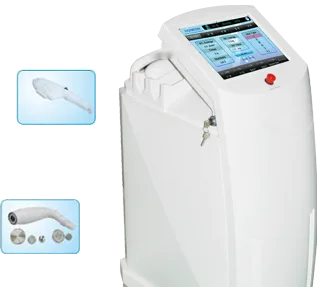
Pmise PE-01
Safe:Single pulse of HPT (Homogeneous Pulse Technology) delivers average energy and avoids the epidermis burns.Efficient…
View details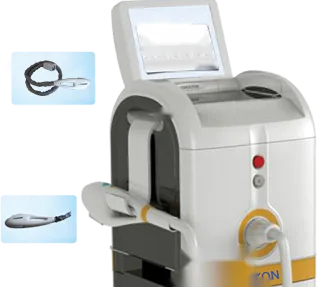
Pmise VE-01
HPT technology, uniform and even.Radio Frequency is a highly controllable energy heat source, works synergistically with…
View details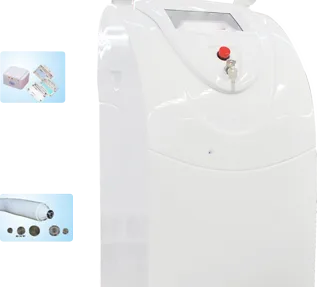
Pmise MF-06
1.LCD display, touch screen input, and friendly human-computer interface.2.IPL, RF and ND YAG laser are well united in o…
View details