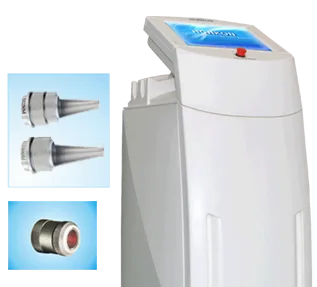
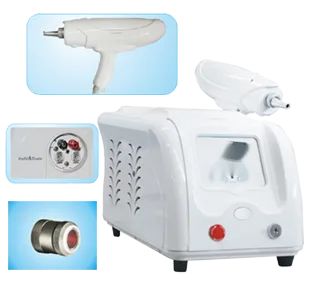
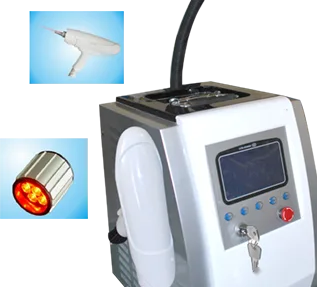
One platform, six jobs. A dual-wavelength pigmented lesions q-switched laser covers freckles, solar lentigines, nevus of Ota, cafe-au-lait macules, tattoo ink and, handled with real restraint, melasma. Here's why: a q-switched nd:yag hunts melanin and ink by depth, not by diagnosis. That multi-indication reach is why it's usually the first pigment machine a clinic buys.
Why does one laser deal with so many different marks?
Heat is the wrong mental picture. A Q-switched Nd:YAG dumps an enormous peak of energy into tissue in a few billionths of a second. Pigment absorbs it, swells faster than it can shed that energy, and shatters. Our device manuals describe what follows plainly: some fragments are bounced out through the skin surface, the rest split into particles small enough for phagocytes to engulf and the lymphatic system to carry away. Clearance runs for weeks. Say so at the consultation, not on day three when the spot still looks like a spot.
Versatility comes from carrying two wavelengths in one cabinet. Green light at 532nm is visible, and pigment near the surface grabs it hard. The 1064nm beam is near-infrared, invisible, and travels further down. Our technical archive puts the physics plainly: penetration into skin is proportional to wavelength. So depth of the target picks your wavelength. The name on the referral letter doesn't.
All of this traces back to selective photothermolysis, described by Anderson and Parrish in Science in 1983: pick a wavelength the target absorbs strongly, keep the pulse shorter than the time that target needs to shed heat, and you spare most of what surrounds it.
The six lesions at a glance
Read the table as orientation, not a protocol. Fluence, spot size and endpoint get decided on the day by a trained operator.
| Lesion | Pigment depth | Usual wavelength | Course length |
|---|---|---|---|
| Freckles (ephelides) | Epidermal | 532nm | A few sessions |
| Solar lentigines | Epidermal | 532nm | A few sessions |
| Nevus of Ota | Dermal | 1064nm | Long course |
| Cafe-au-lait macules | Epidermal or mixed | 532nm or 1064nm | Unpredictable, recurrence likely |
| Tattoo ink | Dermal | 1064nm dark ink, 532nm red and warm tones | Many sessions |
| Melasma (with caution) | Mixed | 1064nm, low fluence | Managed, not cleared |
Six lesions, one by one
1. Freckles
Shallow clusters of melanin, sitting exactly where green light gets absorbed. Easiest name on the list. Spots darken, crust lightly, flake away over days. A few sessions usually finishes it. Then the part most clinics under-sell: sun discipline. Ephelides are UV-driven. Skip the daily sunscreen and they'll be back by next summer, and your patient will blame the machine. Aftercare sits in our freckle removal laser guide.
2. Solar lentigines and age spots
Same green wavelength, tougher customer: lentigines run larger than a freckle and sit on years of sun damage. A clinician report in our engineering archive, from an aesthetic physician in Australia, logged hand pigmentation clearing after three 532nm sessions and solar lentigines after four, with little to no downtime. One doctor, one small caseload: field experience, not trial data. Check the lesion before you fire anything. Irregular border, recent growth, colour shifting? Dermatologist first.
3. Nevus of Ota
Dermal melanocytosis, so 532nm is pointless here. Only 1064nm reaches the pigment. The upside: it's one of the more rewarding conditions on a Q-switched platform. The catch is patience, from everyone. That same archived report logs other dermal naevi taking ten to twelve treatments at 1064nm, a course that runs for months. Sell it up front, photograph every visit under identical lighting, and let the images persuade. Our nevus of Ota treatment guide covers spacing and endpoints.
4. Cafe-au-lait macules
The awkward one. Some fade beautifully over a few sessions. Others barely move. A fair share come back months later, and nobody can tell you which patient is in your chair. Both wavelengths get used, picked by how the lesion behaves after the first pass. Be blunt at consultation, and put the recurrence risk in writing before anyone pays a deposit. Our cafe-au-lait treatment article shows how to frame it.
5. Tattoos
Ink lives in the dermis. Dark ink is 1064nm work, while bright reds and warm tones respond better to green 532nm. Consumer guidance from the US Food and Drug Administration notes removal may take six to ten treatments, that green, red and yellow are the hardest colours to shift while black and dark blue are easiest, and that multi-coloured pieces may need more than one laser. Each pass fragments only part of the ink load. Our Q-switched tattoo removal overview breaks it down colour by colour.
6. Melasma, where less is more
Melasma earns its place with a warning attached. Chronic, relapsing, not a mark you clear once. Patient guidance from the American Academy of Dermatology says it can last for years or even a lifetime, treats daily broad-spectrum sun protection as the foundation, and describes laser or light work as something that may improve results for patients already on topical medication. Low fluence, large spot, 1064nm, honest expectations. Sell control, never a cure. More in our melasma laser treatment article.
532nm or 1064nm? Let depth decide
Keep this in front of you at consultation:
- 532nm for surface pigment: freckles, solar lentigines, red and bright tattoo inks.
- 1064nm for deeper pigment: nevus of Ota, dark tattoo ink, cautious low-fluence melasma work.
- Either one, adjusted by response, for mixed cases such as cafe-au-lait macules.
One platform, so your operator swaps a tip instead of wheeling in a second machine.
How a pigment session actually runs
The sequence hardly changes between indications. The energy does, and that stays a judgement call.
- Confirm the lesion is benign, then shoot a baseline photo under fixed lighting.
- Cleanse, and fit eye protection on patient and operator. Both wavelengths are hazardous, 1064nm worse for being invisible.
- Choose wavelength by depth. Start low, step up toward the clinical endpoint.
- Treat while watching tissue response, not the number on the screen.
- Apply post-care, then repeat the sun protection message at the door.
- Rebook weeks out, so lymphatic clearance can do its half of the work.
What to check before you buy a Q-switched Nd:YAG
Not everything sold as Q-switched serves all six indications. Start with the specs that decide your treatment menu:
- Genuine dual-wavelength output at 1064nm and 532nm. Lose the green line and you lose freckles, lentigines and red ink.
- Adjustable spot size. Our device manuals list a 1 to 5mm continuously adjustable spot on compact dual-wavelength units such as the Pmise QN-06. That range is what lets an operator move between precise spot work and the larger, gentler settings melasma demands.
- Nanosecond pulse width. Shorter pulses keep the effect photoacoustic and limit heat spreading sideways. Higher-energy models such as the Pmise QN-03 are documented at a 6 to 8ns single pulse with single-pulse energy up to 400mJ.
- A sensible repetition rate. Our manuals put 1 to 5Hz on the portable units, plenty for facial pigment work.
Specs are the easy half. What decides whether you can legally sell the machine, and keep it running, never appears on a datasheet. Distributors especially: work through these before signing.
- The regulatory file for your destination market. What a Class IV aesthetic laser needs varies country by country, and paperwork covering one model does not cover the rest of a range. Ask for the document set tied to the exact model on your quotation: electrical safety and EMC test reports, the declaration of conformity, and the factory's quality-system certificate. Then check what your own regulator wants for import and registration. That part is on you. Our guides on medical CE versus standard CE and importing laser beauty machines walk through where buyers get caught.
- Training and applications support at handover. A pigment platform is only as safe as whoever holds the handpiece. Pin down who trains your staff, on-site or remote, what parameter guidance comes by skin type, whether test-spot protocol is covered, and what happens when your best therapist leaves.
- Warranty terms, then spare-parts reality. Service terms in our archived manuals set a one-year free warranty for failures caused by defects in materials or workmanship, with mishandling and wear items such as handpieces, power cords and foot switches billed as spare-parts cost. Normal for the category. What separates suppliers is what they stock, how fast a part ships, and whether anyone answers when a machine dies on a Friday afternoon. Our warranty and spare parts checklist lists the questions worth putting in writing.
- Consumables and running cost. The flashlamp is the line item people forget. Our manuals for Q-switched Nd:YAG units put xenon lamp life at roughly 1,000 hours, after which output energy falls off and the lamp needs replacing. Get the price, the lead time, and whether a local technician can fit it or the handpiece has to fly back.
Nine configurations sit in the Pmise Q-switched Nd:YAG laser range, from portable units to higher-energy consoles. Would you rather start from your patient mix than a spec sheet? The clinic treatment solutions pages work backwards, indication to machine.
Frequently Asked Questions
Can one Q-switched laser really treat all six lesions?
Yes, because it targets pigment by depth rather than by disease name. The 532nm beam handles surface pigment such as freckles and solar lentigines, while 1064nm reaches dermal targets including nevus of Ota and dark tattoo ink. Melasma is the exception, demanding restraint and low fluence. One platform, many indications, which is why clinics buy it first.
How many sessions do pigmented lesions need?
Depth decides. Shallow marks like freckles and lentigines often respond within a few sessions. Dermal targets such as nevus of Ota and tattoos need many more, spaced weeks apart so the body can clear the fragments. Cafe-au-lait macules stay unpredictable and may recur. Melasma isn't counted in sessions at all, because it's managed rather than cleared.
Is a Q-switched laser safe for melasma?
It can help, and it's the indication most likely to backfire. Patient guidance from the American Academy of Dermatology puts daily sun protection and topical treatment first, framing laser work as an addition for people already on medication. Pigment change and recurrence are real risks in darker skin. Use low fluence, a large spot at 1064nm, and sell long-term control.
What should a supplier hand over before I import one?
Ask for the compliance file tied to the exact model you're quoting: electrical safety and electromagnetic compatibility test reports, a declaration of conformity, and the factory's quality-system certificate. Requirements differ by market, so confirm what your regulator needs for import and registration. Sensible extras: the manual in your language, a training plan, and a warranty and spare-parts schedule you can hold someone to.
Pmise Technical Team. We manufacture Q-switched Nd:YAG and other light-based aesthetic platforms and support clinics and distributors worldwide. This article draws on our device manuals, service records and applications experience.