
Pigment Treatment
Freckle Removal (Ephelides): 532nm Q-Switched Laser vs IPL Guide
Freckle removal with laser and light devices works by heating the excess melanin held in the upper skin until the pigment fragments and sheds. Freckles, or ephelides, are shallow. A 532nm Q-switched beam reaches that depth without driving energy into the dermis, so treatment is usually shallow and short-course, though the number of sessions varies with lesion density, Fitzpatrick type and how much sun the patient gets afterwards. Scattered, well-defined spots suit Q-switched 532nm. Diffuse full-face freckling usually suits broadband IPL or E-light.
What freckles actually are
Ephelides are small tan to yellow-brown macules, usually 1 to 2 mm across, scattered over sun-exposed skin. Nose, cheeks, shoulders, forearms. They are flat. Run a finger over one and you feel nothing. Our device manuals record the same picture: yellowish-brown spots on exposed parts, no symptoms, no self-clearing.
Two things set them apart from most pigment your clinic sees. They show up early, often between ages five and ten, and multiply through adolescence. They also answer to the calendar, darkening in summer, fading in winter. Useful clue, and a warning about how easily they return.
Histology is the part buyers most often get wrong. Melanocyte numbers are normal in ephelides. What rises is melanin inside the basal keratinocytes, made by melanocytes that are more active rather than more numerous. Solar lentigines differ, with a real increase in cell numbers. The freckling tendency is inherited and tied to MC1R gene variants, as reviewed by Praetorius, Sturm and Steingrimsson in 2014.
This page is educational information for equipment buyers and clinical teams. It is not medical advice and does not replace diagnosis by a qualified clinician.
Freckles, or something else? Diagnose before you fire
Plenty of brown spots look like freckles at arm's length and behave nothing like them under a laser. A lamp, a magnifier and two minutes save a complaint later.
- Solar lentigines appear later in life, are larger, have crisper borders and don't fade over winter. Similar wavelengths, different approach: see our lentigo treatment page.
- Melasma is patchy and confluent rather than dotted, hormone-driven, and flares badly after aggressive Q-switching.
- Seborrheic keratoses are raised and waxy. If you can feel it, it isn't a freckle.
- Anything asymmetric, multi-coloured, growing, itching or bleeding goes to a dermatologist for dermoscopy and, if indicated, biopsy. Lasering an undiagnosed lesion destroys tissue the pathologist needs.
How 532nm Q-switched light clears freckles
The physics goes back to selective photothermolysis, described by Anderson and Parrish in 1983. Pick a wavelength the target absorbs well, deliver it in a pulse shorter than the target's thermal relaxation time, and the surrounding skin survives.
Melanin absorbs more strongly as wavelength gets shorter, so 532nm beats 1064nm on brown epidermal pigment. Our engineering archive puts it plainly: 532nm is preferentially absorbed by red and brown chromophores and poorly by black and blue, while 1064nm is the reverse. Shorter wavelengths also stop shallower. Exactly what you want when the pigment never left the epidermis.
Pulse width does the rest. Q-switching compresses output into the nanosecond range, and our Nd:YAG manuals specify pulse durations around 6 to 8 ns with spots adjustable from roughly 1 mm to 6 mm. Energy arrives faster than melanosomes can shed heat, so granules fragment photomechanically rather than cook. You see an immediate ashen-white frost. That's your endpoint.
Broadband light is the other legitimate route, and for some faces the better one. Our archive lists IPL as a first-line pick for freckles, with multifunction E-light as an alternative. Q-switched 532nm is a precision tool for discrete spots. IPL and E-light cover a cheek in a few pulses and lift background tone too. Fuller comparison in the freckle removal laser guide.
Treatment protocol and what to expect
What follows is the shape of normal practice, not a prescription. Photograph before session one.
| Item | Typical practice | Why |
|---|---|---|
| Wavelength | 532nm, frequency-doubled Nd:YAG | Strong melanin absorption, shallow reach |
| Pulse regime | Q-switched, nanosecond domain | Fragments melanosomes before heat spreads |
| Spot size | Small, matched to the lesion | Freckles are 1 to 2 mm; you work spot by spot |
| Clinical endpoint | Immediate ashen whitening | Adequate energy, short of blistering |
| Sessions | Varies with density, phototype, sun habits | Reassess each pass; don't sell a fixed course |
| Interval | Several weeks between passes | Crusting resolves, redness settles |
| Downtime | Pinpoint darkening, then micro-crusting | Crusts stay superficial and self-shed |
| Higher-risk patients | Fitzpatrick IV to VI, recent tan, photosensitisers | Raised PIH risk; test patch first |
Always test patch. Treat a small area, wait, watch how that patient heals. Fitzpatrick type drives settings more than any other variable, and our skin type and settings guide covers the adjustments.
Be honest about the outcome. Epidermal pigment sits where light reaches it easily, so response is often quicker than with dermal targets, but results vary with lesion density, skin type and later sun exposure. Quote a range, never a guarantee. Nobody should promise permanence. The genetics remain.
Recommended Pmise equipment
For discrete freckles the workhorse is a dual-wavelength Q-switched Nd:YAG platform with a dedicated 532nm tip, adjustable spot and stable pulse-to-pulse energy. Browse the Q-switched Nd:YAG laser range for specifications.
- Dual output. 1064nm and 532nm from one cavity: the same machine handles deeper pigment, tattoo work and carbon peel, so it earns across more of the appointment book.
- Separate 532nm tip. Keeps beam quality clean at the wavelength you'll use most for epidermal spots.
- A broadband option alongside it. IPL or E-light handles diffuse freckling in the same visit.
An independent report in our archive, by an aesthetic physician running one of these units, records epidermal pigment on sun-exposed sites clearing over a handful of 532nm sessions with little downtime.
What buyers ask before ordering
- Compliance paperwork. Our archive holds CE test certificates for EMC and electrical safety and declarations of conformity covering the Nd:YAG and E-light families. What ships with your unit depends on model and market, so ask us to confirm the set for your registration file.
- Operator training. Every manual we publish carries the same warning: operators must be trained in application technique and laser safety before touching the machine. Training and parameter guidance come with the system. Tell us who operates it and we'll scope that.
- Warranty and service. Units ship with a warranty card and a defined free-warranty period covering failure in normal use, backed by phone and remote support. Terms differ by model and region, so contact us for current warranty and spare-part arrangements.
- Demo and quotation. Want to see 532nm output and handpiece handling first? Ask for a demonstration or a treatment video. Quotations are configuration-specific, so send your case mix.
Aftercare and sun protection
Aftercare decides whether the patient walks away happy. Give it in writing.
- Cool the area straight after treatment. Mild stinging and redness for a day is normal.
- Pinpoint darkening appears within hours, then a fine crust over the next day or two.
- Leave the crusts alone. They lift by themselves, usually inside a week on the face. Picking is the most common cause of a mark that outlasts the freckle.
- Keep it clean, use a bland moisturiser, skip acids, retinoids and scrubs until skin is intact.
- No sauna, no hot yoga, no pool until crusting has fully resolved.
Sun protection isn't optional here, and it isn't only about healing. Freckles are sun-driven by definition, so ultraviolet exposure brings them back. The American Academy of Dermatology recommends broad-spectrum, water-resistant sunscreen of SPF 30 or higher on skin not covered by clothing, reapplied roughly every two hours, and notes SPF 30 filters about 97 percent of UVB. Add a hat and midday shade.
Watch for post-inflammatory hyperpigmentation, especially in darker phototypes and anyone recently tanned. It usually settles over months. Conservative settings plus disciplined photoprotection are your best prevention.
Frequently Asked Questions
How many sessions does freckle removal usually take?
There's no fixed number, and any supplier quoting one is guessing. Epidermal pigment tends to respond faster than dermal pigment because light reaches it easily, but density, phototype and sun habits all move the total. Treat, wait several weeks, photograph, reassess. Give patients a range with a caveat, never a promise.
Will the freckles come back?
They can. The MC1R-linked tendency to freckle doesn't change because you treated the visible spots, and ultraviolet exposure restarts pigment production. Daily broad-spectrum sunscreen, hats and shade protect the result. Patients who return to unprotected sun should expect recurrence, and it's fairer to say so upfront than to explain it later.
Is 532nm safe on darker skin types?
It needs caution. Higher baseline epidermal melanin means competing absorption and a real risk of post-inflammatory hyperpigmentation or patchy hypopigmentation. Test patch first, use conservative fluence, extend intervals, insist on photoprotection beforehand. For some patients a gentler broadband approach, or no laser at all, is the right call.
Q-switched laser or IPL for freckles?
Depends on the face. Scattered, well-defined spots on otherwise even skin suit Q-switched 532nm, treated individually to a whitening endpoint. Dense full-face freckling with uneven tone often does better with IPL or E-light, which covers area fast and lifts background redness. Clinics owning both choose per patient.
Next step: get the configuration right
Pigment work is unforgiving of the wrong tool, and a laser bought on price alone tends to sit idle. Tell our application engineers what you treat most and which phototypes walk through your door. We'll come back with a configuration, the compliance documents for your market, a training plan and a written quotation. Want to see the 532nm handpiece working first? Ask for a demonstration. Start with the Q-switched Nd:YAG range.
Recommended Equipment
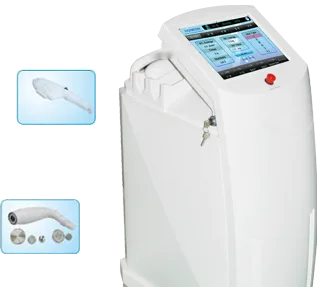
Pmise PE-01
Safe:Single pulse of HPT (Homogeneous Pulse Technology) delivers average energy and avoids the epidermis burns.Efficient…
View details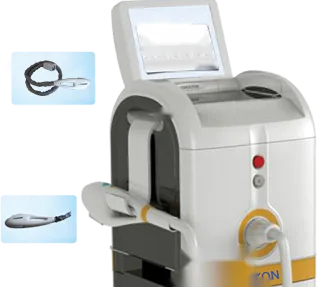
Pmise VE-01
HPT technology, uniform and even.Radio Frequency is a highly controllable energy heat source, works synergistically with…
View details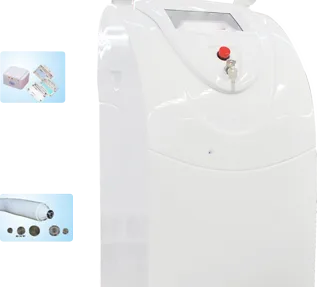
Pmise MF-06
1.LCD display, touch screen input, and friendly human-computer interface.2.IPL, RF and ND YAG laser are well united in o…
View details