
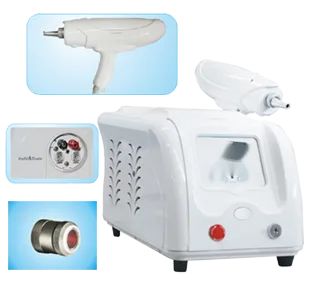
Quick answer on freckle removal: freckles sit in the epidermis, so a Q-switched 532nm pulse reaches the pigment directly and a short course of sessions is usually enough to lighten them visibly. How short depends on freckle density, Fitzpatrick type and sun habits. None of it holds without sun protection.
Last reviewed: June 2026.
How a Q-switched pulse breaks up a freckle
The pulse wrecks the pigment without cooking the skin around it. Anderson and Parrish set out the rule in Science in 1983: when a target absorbs light strongly and the pulse ends before it can dump heat into its neighbors, damage stays where you aimed it. Melanin absorbs green light hard, and a few billionths of a second later the pigment fragments.
Our device manuals describe what follows: some fragments bounce out through the skin surface, the rest are broken small enough for phagocytes to engulf and the lymphatic system to clear. A treated spot doesn't vanish on the table. It darkens first. Patients feel a snap, the spot goes pale gray within a second, and that gray is your endpoint.
Why 532nm suits epidermal pigment
Shallow target, shallow wavelength. The dermatology reference in our engineering archive describes freckles as 1 to 2mm yellowish-brown spots scattered over sun-exposed skin, usually appearing between ages five and ten, with the histology being melanocytes increasing in the epidermis. Nothing in that asks for depth.
An Nd:YAG rod emits at 1064nm. Send that beam through a frequency-doubling crystal and you get 532nm, visible green. Longer wavelengths travel further into tissue, so two beams on one console do different jobs.
| Beam | Behavior in tissue | Usual pigment target |
|---|---|---|
| 532nm, frequency-doubled, visible green | Stays superficial, strongly absorbed by melanin | Freckles, lentigines, brown surface spots, red ink |
| 1064nm, native Nd:YAG, invisible infrared | Penetrates deeper | Dermal pigment, nevus of Ota, blue and black ink |
Both beams live on one platform in a dual-wavelength Q-switched Nd:YAG laser. Almost nobody buys a 532nm-only device. Eye protection has to cover the pair, since one beam dazzles and the other is invisible. Our manuals specify goggles rated across roughly 200 to 1080nm, and these are Class 4 laser products under IEC 60825-1. Enforce that one hardest.
Rule out what isn't a freckle before you treat
Any pigmented lesion that is asymmetric, has an irregular or poorly defined border, carries more than one color, measures more than roughly 6mm across (about the width of a pencil eraser), or has changed in recent months must be assessed by a dermatologist before a laser touches it. Those five warning signs are the ABCDEs of melanoma published by the American Academy of Dermatology: asymmetry, border, color, diameter, evolving. The AAD notes melanomas can be smaller than that, so size alone never clears a spot. Clinicians also watch for the ugly duckling, the one lesion that looks nothing like the patient's others, which sits outside the ABCDE acronym but is worth a referral on its own. Lasering a suspicious lesion destroys the tissue a pathologist would need to read it, and that mistake can't be undone later. Anything solitary and dark, raised, crusted or visibly changing belongs in a dermatology chair. Refer it.
The contraindication list in our device manuals for this laser class is short, and it belongs in the consultation rather than on treatment day:
- Photosensitizing medication, with tetracyclines the classic example.
- Atypical moles, broken skin, active herpes or any suspected malignant lesion in the field.
- Pregnancy.
- Scar diathesis or a history of keloids.
- Anticoagulant therapy within the previous two weeks.
- Poorly controlled diabetes, hypertension, cardiac disease, epilepsy.
- Medicated or functional cosmetics used on the area within a month.
Two more come from practice, not the manual. A fresh tan loads the epidermis with competing melanin and raises burn risk. Coexisting melasma can flare after aggressive pigment work. Both mean reschedule and test cautiously.
Oral isotretinoin needs a footnote. The old habit was an automatic six-month wait, though the American Society for Dermatologic Surgery guidelines task force consensus, published in Dermatologic Surgery in 2017, found insufficient evidence for delaying non-ablative lasers after isotretinoin. Many clinics still defer. Put your policy in the consent notes.
Which Q-switched settings actually matter?
Three dials decide the result: wavelength, spot size and energy. Pulse duration is fixed by the Q-switch, so you're balancing how much energy lands on how much area.
- Wavelength. 532nm for freckles. Reach for the 1064nm tip only when the pigment clearly sits deeper than an ephelide.
- Spot size. Energy density is energy divided by area. Our manuals put it bluntly: bigger spot, lower density. New operators widen the spot, keep the same joules, then wonder why nothing frosted.
- Energy. The manuals say to choose the dose "from small to large". Work up. Lesions on one face absorb differently.
- Coverage. Freckles get treated spot by spot, not painted on in full-face passes. A densely freckled cheek takes patience.
You want faint gray-white frosting that fades within minutes. Pinpoint bleeding, chalky white, or an instant blister means you ran too hot. Higher Fitzpatrick types carry more competing melanin, so start low, test a patch, and read our notes on skin type and laser settings first. Case selection sits on our freckle treatment page.
How many sessions does freckle removal take?
Fewer than dermal pigment work, and that's the honest limit of what anyone can promise up front. The target is epidermal and the green beam reaches it directly, so many freckle cases clear noticeably after one well-run session, with a further pass or two for stubborn areas. Density, skin type and sun habits move that number both ways.
Spacing follows other pigment work in our manuals: treatments sit about a month apart so skin can heal, and some indications stretch to 45 or 90 days. A workable sequence:
- Consult, photograph in fixed lighting, screen every lesion against the ABCDE criteria, refer anything doubtful.
- Patch test a small area, especially for skin types IV and above, then review it a couple of weeks later.
- Run the first full 532nm session to a light frosting endpoint, spot by spot.
- Heal and protect for around four weeks, no sun on the treated zone.
- Reassess in the same lighting, then treat only residual spots that justify another pass.
Downtime and scab care
Warn patients it looks worse before it looks better. Treated freckles frost, darken over a day or two into tiny crusts, then flake off across one to two weeks. The ones who weren't warned phone on day three. Leave the crusts alone, because picking them off early is the surest way to turn a clean result into a lasting mark. Aftercare worth printing on a card:
- Keep the area dry for 48 hours, which our manuals state directly for this laser class.
- No scrubbing, no exfoliants, no picking. Let the crusts shed on their own.
- Apply the bland healing ointment the clinic recommends, thinly.
- Sunscreen daily. The American Academy of Dermatology recommends broad-spectrum, water-resistant sunscreen with SPF 30 or higher, reapplied through the day and after swimming or sweating.
- Skip saunas, hot yoga and heavy sweating until the crusts have gone, and keep makeup off them.
- Call the clinic about spreading redness, blistering, or a spot that keeps darkening.
Post-inflammatory hyperpigmentation is the complication that matters here, and it lands hardest on darker or recently tanned skin. Book tanned patients later. Costs a slot, saves a refund.
Will the freckles come back?
Some will, and you should say so before the first pulse. Freckles are ultraviolet light acting on a genetic tendency, and the dermatology reference in our archive records them as related to sunshine and season, appearing on exposed parts of the body. A laser changes neither half of that.
Lasers clear pigment that already exists. They can't switch off how a melanocyte answers UV. Patients who wear sunscreen and a wide hat hold a clean result for years; patients who spend August on a boat book a touch-up. Sell it as maintenance from day one.
Choosing a machine for freckle work
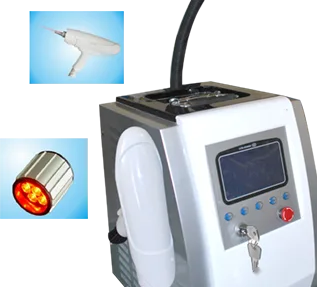
Buy dual wavelength. The green beam handles freckles and surface spots, and the infrared beam earns its keep on deeper pigment, nevus of Ota and tattoo ink. The Q-switched Nd:YAG specification documented in our engineering archive for this class runs both wavelengths from one console, with a pulse duration of 6 to 8 nanoseconds, spot size adjustable from 1mm to 6mm, and a repetition rate of 1 to 5Hz. On the current range that class is sold as the Pmise QN-03 and the Pmise QN-05, and the archive lists that class as suitable for lentigines and related pigment work.
One honest note before anyone signs a purchase order: IPL performs well on freckles too, and the clinical reference in our archive names it first choice for broad, diffuse facial freckling. Plenty of clinics run both. If your pigment caseload is wider than freckles, our guide to treating pigmented lesions with a Q-switched laser maps lesion types to wavelengths, and the lentigo solution page covers the closest neighbor.
Specifying equipment rather than browsing? Ask us for two documents: the 532nm and 1064nm specification sheet for the Pmise QN-03 and QN-05, and the pigment indication parameter table with wavelength, spot size, energy range and treatment interval per lesion type. Send your case mix and monthly volume through the Pmise contact form, and say whether you want a live handpiece demonstration or distributor terms. Our engineers reply with both documents plus a parameter recommendation, not a bare price list.
Frequently Asked Questions
Is a 532nm laser or IPL better for freckles?
Depends on the face in front of you. IPL treats broad, diffuse freckling gently and suits patients who want minimal crusting. A Q-switched 532nm laser hits individual spots harder and more selectively, often in fewer visits, at the cost of crusts for a week or two. Dense freckling favors IPL. A few dark, defined spots favor the laser.
Can darker skin types have Q-switched freckle removal?
They can, with more caution. Darker skin carries more background melanin competing for the same 532nm light, which raises the risk of post-inflammatory hyperpigmentation. Standard practice is a patch test, conservative energy, longer intervals, and firm sun avoidance. Some practitioners prefer IPL or topical routes for higher Fitzpatrick types.
How soon will patients see a result?
Crusts form within a day or two and shed over one to two weeks, and the skin underneath already looks lighter once they drop. Allow another two weeks for redness to settle before judging. If a course is planned, the result builds across sessions spaced roughly a month apart. Photograph every visit in the same lighting.
Pmise Technical Team. Pmise builds laser and light-based aesthetic equipment, including dual-wavelength Q-switched Nd:YAG pigment systems, and writes from device engineering and clinical application support.