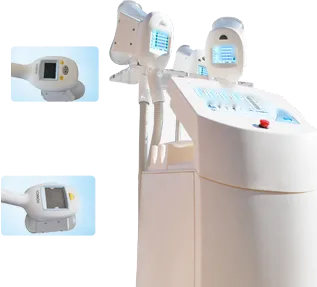
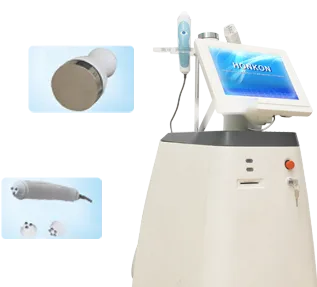
A cavitation and radiofrequency machine is a body-contouring workhorse. It pairs ultrasonic cavitation to disrupt fat cells with radiofrequency to tighten skin. That’s why combined platforms dominate treatment menus for clinics, med-spas, and distributors. You get two revenue streams in one device — without doubling your floor space or training budget. Whether you run a med-spa or source for distribution, this guide covers what matters: how the two modalities interact, realistic outcomes, session flow, and the hardware details that separate a worthwhile investment from a shiny box.
Key Takeaways
- Cavitation uses low-frequency ultrasound to mechanically disrupt fat cells; RF uses controlled heat to tighten skin and stimulate collagen.
- Combined platforms work best when the two modalities are run sequentially, not simultaneously.
- Realistic client outcomes come from a series of sessions, hydration, and healthy lifestyle support—not a single treatment.
- Buying priorities include adjustable intensity, RF depth control, handpiece ergonomics, duty cycle, consumables, training, and warranty.
- Handpiece durability and spare part availability directly affect long-term return on investment.
Cavitation disrupts. RF tightens. Together, they turn a non-invasive service into a package.
How Ultrasonic Cavitation Actually Works
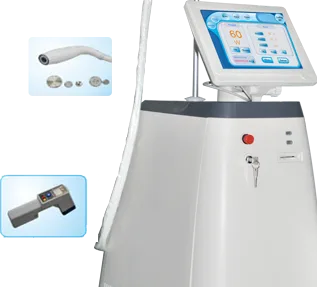
Ultrasonic cavitation targets localized fat. The handpiece sends low-frequency ultrasound waves into the treatment area. Those waves create pressure changes in the interstitial fluid. Tiny bubbles form and collapse — that’s the ‘cavitation’ part. The mechanical disruption damages fat cell membranes. Fat content leaks into the lymphatic system. Your client’s body then processes and eliminates it over the following days. The ultrasound frequency is chosen to resonate with the target tissue depth. It’s not thermal — it’s mechanical. That’s why clients feel a buzzing or ringing rather than heat during the cavitation step.
It’s not a weight-loss tool. It’s a spot reduction tool for stubborn pockets that resist diet and exercise. That distinction matters for client education. Because the disruption is mechanical, the body’s lymphatic system does the heavy lifting. That’s why hydration matters. Dehydrated clients often see slower clearance. A few minutes of dry brushing or light massage after cavitation can help.
What Radiofrequency Adds to Body Contouring
Radiofrequency heats the dermis. It’s a controlled thermal injury. That triggers collagen contraction and new collagen production over weeks. On its own, RF is a skin-tightening modality. Combined with cavitation, it addresses the loose skin that can happen after fat volume changes. The sequence matters: cavitation first, then RF to encourage lymphatic drainage and tighten the area. RF’s thermal effect works on collagen fibers. The heat causes immediate contraction, but the real payoff is new collagen production over the following weeks. That means the skin appears firmer over time, not just right after the session. Some clinics pair RF with cavitation because they see better skin texture over a series.
RF can be delivered with different electrode configurations. Monopolar RF uses one electrode and a grounding pad; bipolar RF has both electrodes in the handpiece. Multipolar RF uses multiple electrodes to distribute energy more evenly. Combined platforms often use bipolar or multipolar because they’re easier to use on small areas. The operator’s goal is to reach therapeutic heat without causing pain or burns. Good platforms give you real-time temperature feedback or preset modes.
Why Combined Cavitation and RF Platforms Sell Well
Combined systems simplify the treatment room. Here’s what buyers tell us they value.
- Lower cost per treatment area than buying two separate machines.
- One client can receive both modalities in the same session, which improves throughput.
- Technicians learn one interface, reducing training time.
- Marketing is simpler: body contouring and skin tightening in one promise.
- The RF step feels warm and soothing after the sometimes intense cavitation step, improving perceived comfort.
Combined doesn’t mean automatic. You still need a reasoned protocol. Cavitation and RF are not simply ‘on’ at the same time. Most protocols run them sequentially. Cavitation first disrupts fat; RF then heats the area, which may help with lymphatic flow and begins tightening. Running both at once can overheat the skin and make the session uncomfortable. Med-spas, body-sculpting studios, and even some physiotherapy clinics add combined cavitation RF to their menu. The device pays for itself through package sales, not single sessions. Some distributors prefer a combined platform because it lets them offer a ‘body sculpting package’ without needing separate training for each modality. The technician can follow a preset menu. That consistency is valuable when you train new staff. See our slimming machine page for combined platforms we build.
Realistic Expectations for Your Clients
Cavitation and RF are not liposuction. They won’t produce dramatic results in one session. The U.S. Food and Drug Administration (FDA) classifies ultrasonic cavitation and radiofrequency devices for body contouring as medical devices when they are marketed for fat reduction or skin tightening; buyers should confirm a device’s cleared indications. The American Academy of Dermatology Association (AAD) also notes that noninvasive body contouring results are gradual and typically require multiple sessions plus healthy habits. Most experienced operators describe the change as gradual, with best outcomes after a series. A client with a small, localized pocket usually sees better definition; someone with larger volume may need many more sessions and a realistic conversation. Imagine a client with an abdomen that hasn’t responded to ab work. After a series of weekly treatments, they might notice their waistband feels looser. That’s a realistic win. A client expecting to drop two dress sizes in a month will be disappointed.
Set expectations early: this is a course of treatments, not a single-event fix. That message reduces refunds and bad reviews. Healthy diet and hydration support lymphatic clearance. Without that, results stall. Always screen for contraindications: pregnancy, active implants, liver or kidney disease, open wounds, and certain medications. If in doubt, refer to a physician. Keep a photo log. Before-and-after photos at consistent angles and lighting are your best marketing assets. They also protect you if a client claims no result. You can show the subtle changes that words miss. We compare expected outcomes in cavitation vs cryolipolysis vs RF.
Session Protocols That Work in a Busy Clinic
Protocol varies by area and device, but a common flow looks like this.
- Consultation and measurements. Mark the area, take photos.
- Apply conductive gel.
- Run cavitation handpiece in slow, overlapping passes for 10-20 minutes per area, depending on size.
- Switch to RF handpiece for 10-20 minutes to heat the dermis and support lymphatic movement.
- Finish with light massage or suction if your platform includes it.
Most clinics schedule sessions once or twice a week for a series of several weeks. Maintenance every month or two after the initial course keeps clients engaged. Don’t guess — your device’s training should specify pulse durations, intensity limits, and interval timing. Cavitation intensity depends on the area’s fat thickness and client tolerance. Thinner areas may need lower power; thicker backs or thighs can handle more. RF energy should be set low enough to keep the skin comfortably warm, not burning. A good rule: if the client can’t hold a conversation, the energy is too high. Sell maintenance packages. Once a client finishes an initial series, monthly maintenance sessions keep them coming back and generate recurring revenue without new client acquisition cost. Some protocols include vacuum or RF suction during cavitation to improve contact. If your device has this, use it. It reduces the chance of uneven energy distribution and makes the session more comfortable.
What to Check When Buying a Cavitation RF Machine
Don’t buy on watts alone. A high number on the brochure can still be uncomfortable or hard to use. Here’s the short version.
| Feature | Why it matters |
|---|---|
| Adjustable cavitation intensity and frequency | Lets you treat different body areas and client sensitivities without changing handpieces. |
| RF depth control | Superficial vs deeper heating changes the tightening effect and comfort. |
| Handpiece ergonomics | Long treatment sessions mean wrist fatigue. Look for lightweight, balanced heads. |
| Duty cycle and cooling | Prevents overheating on back-to-back appointments. Active cooling extends session count per day. |
| Consumables and gel compatibility | Some platforms need proprietary gels; others work with standard ultrasound gel. That affects running cost. |
| Training and support | Clinical protocols and troubleshooting matter as much as hardware. |
Also ask about warranty terms. Some manufacturers cover parts but not labor; others offer remote video support. Check if the company provides updated treatment protocols when they refine the device. A machine that gets firmware updates is a better long-term buy. Finally, look at the manufacturer’s reputation for shipping spare parts quickly. A broken handpiece that takes eight weeks to replace costs you clients. One overlooked point: the display and menu language. If your staff are not native English speakers, a device with a confusing icon-only interface creates errors. Ask for screenshots of the UI before you buy. Our slimming machine sale guide walks through sourcing pitfalls. Ask for a demo before you commit.
Handpieces and Consumables: The Overlooked Part
Handpieces wear. Cavitation heads degrade with use; RF tips may need replacement after a certain number of sessions. Ask about spare part cost and availability. Some manufacturers sell cheap machines but expensive replacement heads. That flips your ROI math. Cavitation handpieces often use a titanium or ceramic tip. Cheaper models may use a plastic housing that cracks after repeated sterilization. RF handpieces can be monopolar, bipolar, or multipolar. Multipolar RF is popular because it delivers energy in a pattern that feels more even to clients. Ultrasound gel is cheap, but some systems work best with a specific viscosity. If a manufacturer requires their own gel, find out the cost per treatment. That’s a hidden number that shows up on your P&L.
Our engineering archive includes early imaging of combined handpieces. That history taught us to design for cable strain relief, balanced grip, and easy gel cleanup. Those details don’t show on a spec sheet until week three of daily use. Cable length matters too. A short cable forces the client to sit close to the machine, which is awkward. Look for at least a meter of slack so the operator can move around the treatment bed. For a dedicated cavitation-focused system, see our cavitation machine.
Frequently Asked Questions
How many cavitation RF sessions are needed to see results?
It varies by client, area, and device settings. Most experienced clinics describe a series of sessions, often weekly, with gradual improvement. A small, localized pocket may respond faster than a larger area. Set expectations for multiple sessions and a healthy lifestyle. One session won’t remove a decade of stored fat.
Is cavitation RF treatment painful?
Cavitation often produces a high-pitched ringing or buzzing sensation, sometimes with warmth. RF feels warm, like a hot stone massage. Most clients tolerate it well. But always perform a patch test and adjust intensity per client. Discomfort shouldn’t be the goal — results should.
Can cavitation and RF be done on the same day?
Yes. That’s the point of a combined platform. Always follow the manufacturer’s recommended sequence, usually cavitation first, then RF. Wait 48-72 hours between sessions on the same area. Hydration and light activity support lymphatic clearance.
What’s the difference between cavitation and laser lipo?
Laser lipo (like a low-level laser pad) works differently and often has different depth. Ultrasonic cavitation uses mechanical disruption; RF uses heat. Combined cavitation RF machines address both fat disruption and skin tightening, which a single laser often can’t.
Can I use cavitation RF on the face?
Body cavitation is usually too aggressive for facial use. Some combined platforms include a smaller facial RF handpiece, but check the manufacturer’s indication. When in doubt, use a dedicated facial device.
Published: 2026-08-08 | Last updated: 2026-08-08
By Pmise Technical Team. Pmise engineers and product specialists design, test, and support laser and light-based aesthetic systems for clinics and distributors, with hands-on experience in combined body-contouring platforms.