A distributor grabbed my sleeve between demo bays last Tuesday and asked, 'Which microdermabrasion machine should I actually stock?' My answer never changes: pick the one that fits your consumables model and your clients' skin—not the one with the fanciest screen. A professional microdermabrasion machine is still a reliable workhorse for superficial exfoliation. It will not resurface deep acne scars. It won't lift jowls. What it does, it does well: controlled mechanical abrasion and vacuum suction that lifts away dead stratum corneum.
I've watched clinics overpay for machines with extra attachments they never use. Then they grumble about crystal costs or tip replacements six months later. That's why this guide leans on what actually matters at the treatment bed, not the brochure.
What a Microdermabrasion Machine Actually Does (and Doesn't)
Microdermabrasion exfoliates the outer epidermis. That's the stratum corneum—the layer of dead cells your clients shed constantly. A microderm machine scrapes or blasts away that layer and vacuum-suctions the debris. The American Academy of Dermatology describes microdermabrasion as a minimally invasive skin-resurfacing procedure that gently sands the skin to remove the thicker, uneven outer layer. The U.S. Food and Drug Administration classifies these devices as Class I medical devices with general controls. No tissue vaporization, no thermal injury, no downtime.
So what doesn't it do? It won't eliminate atrophic acne scars. It won't erase deep wrinkles or sun damage at the dermal level. If a client wants structural changes, you need laser resurfacing, radiofrequency microneedling, or chemical peels—and a proper consultation. Microderm is a maintenance and texture treatment, not a corrective one. I say that on every sales call because it sets honest expectations.
Treatment depth stays superficial. Some practitioners quote micron numbers, but those vary wildly with suction pressure, tip coarseness, and hand speed. My advice: don't promise numbers. Promise smoothness and a glow that lasts a few days.
Diamond-Tip vs Crystal: The Two Mechanisms That Still Define the Category
You're choosing between two abrasive delivery systems. Diamond tips. Or aluminum oxide crystals. Both pair with vacuum suction. That's the entire category in one breath. The right pick depends on how much mess you'll tolerate and how you want to bill consumables.
| Feature | Diamond-tip microderm | Crystal microderm |
|---|---|---|
| Abrasive medium | Reusable diamond-encrusted tips | Disposable aluminum oxide crystals |
| Vacuum suction | Yes, lifts dead cells and stimulates | Yes, propels crystals and collects debris |
| Consumable cost | Lower per treatment; tips need replacement after wear | Higher per treatment; crystals and filters must be replenished |
| Mess | Minimal | Can scatter crystals; needs cleanup and waste handling |
| Treatment feel | Scratchier, more controlled | Often described as smoother, more uniform |
| Best fit | Busy facial rooms, hygiene-focused clinics | Practitioners who want a lighter touch and don't mind disposables |
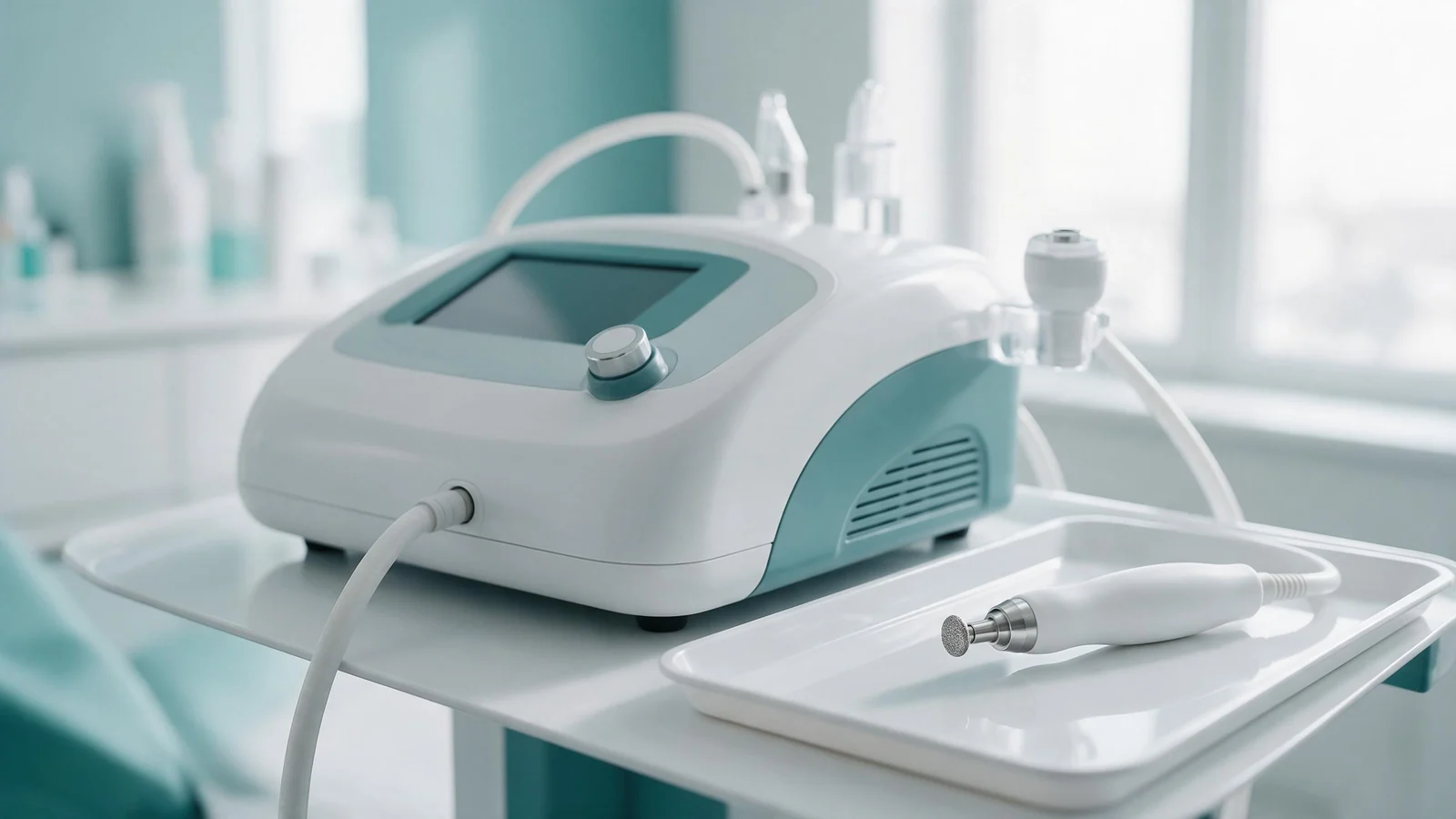
Diamond microdermabrasion gets the nod in most modern clinics I work with. No crystal dust. No consumable crystals. But you must sterilize tips between clients and track tip wear. A dull diamond tip is useless. Crystal machines are still common in Europe and in high-volume medi-spas. The crystal stream is uniform, but filters clog and the waste path needs a plan.
What It Costs You to Run: Consumables Are the Real Price
The machine price is the smallest number in the room. A cheap unit with expensive proprietary crystals will bleed you dry. A pricier diamond machine with cheap, available tips might pay for itself faster. I won't invent profit numbers for you. But here's the logic: a crystal machine demands a recurring purchase for every single treatment. A diamond machine demands a tip replacement after dozens of sessions—and that replacement is not optional.
Filters are the quiet killer. Every vacuum system uses them. They clog with skin debris and crystal dust. Miss one filter change and suction drops, treatment quality falls off, and clients notice. Stock spare filters as if they were consumables, because they are. Ask about vacuum pump service intervals, too. A burnt-out pump is a bench repair you don't want in week two.
Throughput, Training, and the Treatment Room
Microderm is fast. That's its charm. A full-face pass can fit inside a facial or a lunchtime slot. The slower part is prep and cleanup. If you choose crystal, cleanup adds time. If you choose diamond, sterilization adds time. Either way, a single therapist can handle back-to-back clients without breaking a sweat—provided suction is adjustable.
Suction control is the most underrated spec. Too strong and you bruise thin skin; too weak and you're tickling. Look for a machine with fine-grained vacuum adjustment, not just low-medium-high. Tip range matters too. A coarse tip for body work, a fine tip for delicate eye area. Build quality shows in the handpiece weight and the quality of the seals. A flimsy handpiece feels cheap and breaks. I'd rather stock a simple, robust unit than a feature-laden box with a plastic wand.
Training is straightforward. Contraindications matter: active acne flare, rosacea, open wounds, recent sunburn—those clients get sent home or offered a gentler wet treatment. For a modern wet alternative that infuses serums while it exfoliates, see our hydra-peel machine. It's not a microderm replacement in every protocol, but it's the direction a lot of facial menus are heading.
Hydra-Peel and Modern Wet Exfoliation: Where the Market Has Moved
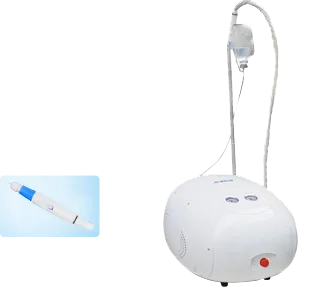
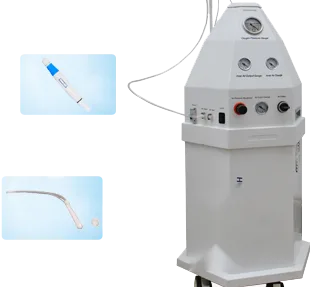
Here's the honest part. A classic microdermabrasion machine works dry. The market has shifted hard toward wet hydradermabrasion—often called hydra-peel or aqua peel—because it pairs exfoliation with serum infusion in one pass. Pmise offers exactly this as the next step. The hydra-peel machine uses a spiral tip, vacuum, and a liquid delivery line to slough and infuse simultaneously. Clients leave with less redness and more glow. It's a strong upsell from microderm.
That doesn't mean microderm is dead. Budget-conscious clinics still buy it. Clients with very sensitive skin sometimes prefer a purely mechanical scrub without serums. It's also an easy add-on to a facial or a back treatment. But if you're building a modern menu, the aqua peel machine concept should sit at the center. You can pair it with a water oxygen jet for hydration and oxygen infusion on the same visit. Think of microderm as the entry-level tool, and the wet systems as the flagship service.
If you want a single platform that does wet exfoliation and serum infusion with more automation, take a look at the M520C Plus. It covers a lot of what used to require three separate machines.
A Practical Buying Checklist for Clinic Buyers and Distributors
Print this. I'll keep it short.
- Adjustable vacuum suction — fine control, not just presets.
- Tip range — at least coarse and fine diamond heads, or a crystal system with adjustable flow.
- Consumable availability — ask for the per-treatment cost of tips or crystals, plus filter replacement interval.
- Build quality — metal handpiece, solid seals, no cheap plastic knobs.
- Service and warranty — who fixes the pump, and how fast?
- Noise level — vacuum pumps whine; test it in a quiet room.
- Training and marketing support — does the manufacturer give you protocols and client-facing materials?
Don't skip the noise test. A loud pump will annoy clients during a relaxing facial. And ask about spare parts lead times. A broken handpiece shouldn't sideline your machine for six weeks. Look for ISO 13485 certification as a quality signal—it means the manufacturer runs a medical device quality management system.
Frequently Asked Questions
Which is better for a new clinic: diamond or crystal microdermabrasion?
For most new clinics, diamond-tip wins. No crystal dust, lower per-treatment consumables, and less mess in a tight treatment room. Crystal machines can deliver a gentler, more uniform abrasion, but you'll manage crystal inventory and filter changes. If your team is careful with sterilization and tip tracking, diamond is the safer first machine. If you want no reusable tips to maintain, crystal has its place.
Can microdermabrasion remove acne scars?
No. Microdermabrasion removes the outer dead-cell layer only. It can improve skin texture and fade very superficial post-inflammatory marks, but it won't remodel atrophic or raised scars. Those need laser resurfacing, microneedling, chemical peels, or a dermatologist's assessment. I'd never sell a microderm machine on scar removal claims. It isn't true, and it sets your clinic up for disappointment.
How often can a client have microdermabrasion?
A common esthetics schedule is every two to four weeks, matching the skin's natural renewal cycle. Too frequent and you risk barrier irritation. Let the client's skin response guide you—some tolerate weekly sessions; others need longer gaps. Always patch test on sensitive areas first and skip treatment after recent sunburn, aggressive peels, or retinoid irritation.
Is microdermabrasion safe for all skin tones?
Generally, yes, because abrasion stays in the outer epidermis and doesn't target melanocytes. But all skin can be irritated by aggressive suction. Use lower pressure on darker skin tones, as post-inflammatory hyperpigmentation risk exists with any trauma. The FDA classifies these devices as Class I, but that doesn't replace good clinical judgment. When in doubt, refer to a dermatologist.
Related reading
Pmise Technical Team — we bench-test every device we ship and train distributors on suction calibration, consumables, and honest client expectations.