A useful body contouring machine comparison starts with one fact: cavitation, cryolipolysis and RF don't really compete. Cavitation shakes fat cells apart. Cryolipolysis freezes them. RF heats the dermis so slack skin firms up. Three mechanisms, three different clients.
Buy the wrong one and you own a machine for a complaint nobody in your chair has. Offer cavitation when clients want volume off larger areas, cryolipolysis when they point at one stubborn pinchable bulge, RF when the complaint is looseness rather than fat. Buying only one machine? Take a cavitation plus RF platform, because clients ask for both in the same breath. Below: how each works, who you must turn away, and what each costs.
How does ultrasonic cavitation work?
Cavitation uses low-frequency sound to stress fat cell membranes until they fail. Our engineering archive for the cavitation platform describes ultrasonic tips emitting a 40 kHz sonic wave, chosen because that frequency has the greatest effect on hypodermis fat tissue. Each cycle swings between positive and negative pressure until the cell wall breaks, the fat is emulsified, and metabolism handles the rest.
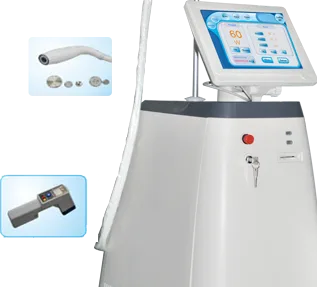
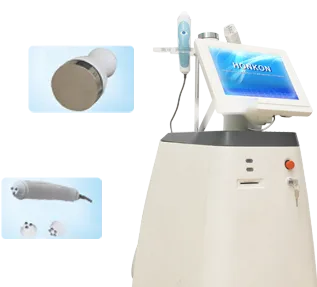
The same archive gives the configuration: two cavitation handles plus one RF handle, 40 kHz, 60 W ultrasonic output, RF rated at 50 W, tips 72 mm across. Big tips, big areas. Here's the catch no brochure prints: cavitation removes volume and does nothing for skin quality, so a client who loses a centimetre can still look softer. That's why the RF handle shares the trolley on the Pmise CA-01 cavitation system.
How does cryolipolysis (fat freezing) work?
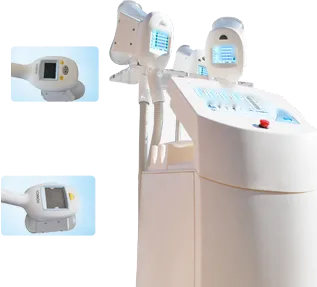
Cryolipolysis kills fat cells with cold and lets the body clear the debris over weeks. Fat cells are more vulnerable at low temperatures than the skin, nerves and vessels around them, which is what makes selective cooling possible. Our device manuals describe the pathway: a vacuum draws skin and fat into the applicator, cold crystallizes the subcutaneous fat cells and triggers natural cell death, surrounding tissue is unharmed, metabolism does the cleanup. Change appears gradually, not on the drive home. Once the applicator is placed and the time programmed the handle runs itself, so one operator can set a client up and walk away.
Watch your promises. A 2025 systematic review and meta-analysis in the World Journal of Plastic Surgery found cryolipolysis reduces local circumference and fat-layer thickness while overall body weight does not change significantly. The U.S. Food and Drug Administration says it plainly: non-invasive body contouring does not treat obesity and will not produce weight loss. Applicator shape and cup size matter more day to day than temperature headlines; compare ours on the Pmise cryolipolysis machine page. Selling into the US? The FDA states no non-invasive body contouring device is cleared for treating the breasts.
Where does RF skin tightening fit?
RF firms skin by heating the dermis, not by removing fat. Heat contracts existing collagen straight away for a mild same-day tightening, then fibroblasts lay down new collagen over the following weeks. Clinical reviews of radiofrequency in facial rejuvenation describe that two-stage effect: immediate collagen change, then neocollagenesis continuing for months.
So don't sell RF as a fat machine. Sell it as the finisher. Clients who lose volume often expose laxity that wasn't obvious while the area was full. Pmise builds RF into the cavitation platform and supplies separate units on the slimming and RF body systems page. Bipolar or multipolar? Our RF equipment buying guide goes deeper.
Cavitation vs cryolipolysis vs RF: side by side
No single modality does everything. Which is best depends on area size, skin condition, and operator time.
| Factor | Cavitation | Cryolipolysis | RF tightening |
|---|---|---|---|
| Mechanism | 40 kHz sound ruptures fat cells | Cooling crystallizes fat cells | Heat rebuilds collagen |
| Best area | Large, soft | Small to medium, pinchable | Any, tone-focused |
| Sessions | A course | One or a few cycles per area | A course, builds over weeks |
| Operator time | Hands-on throughout | Set up and walk away | Hands-on throughout |
| Downtime and risk | Minimal, transient redness | Minimal, but rare non-self-limiting events | Minimal, burn risk if mishandled |
Look hard at the operator time row. It decides more purchases than clinical nuance.
Risks and contraindications you have to screen for
Non-invasive doesn't mean risk-free, and the three differ most in what happens when something goes wrong. Read this as screening prompts for a qualified practitioner working inside your device labelling and local regulations.
Usual, self-limiting reactions
- Cavitation: warmth over the treated zone, transient redness, and an audible buzzing some clients dislike.
- Cryolipolysis: sharp cold, then numbness. Redness, swelling and bruising under the cup are common, and reduced sensation can linger for weeks.
- RF: heat and erythema. Poor coupling or an operator chasing speed is how burns happen.
Rare, but not self-limiting
Cryolipolysis carries one complication the other two don't. The FDA describes paradoxical adipose hyperplasia: fatty tissue that grows instead of shrinking, a firm raised bulge roughly the applicator's shape, appearing months later. It doesn't resolve on its own and may require surgery. The FDA also reports hernia in treated areas and warns against treating near a pre-existing hernia or structurally weak tissue. Cold injury such as blistering appears in published reviews of cryolipolysis adverse events. Uncommon, all of it. It still belongs on your consent form.
Candidates you should exclude
- Cryolipolysis: cold-related disorders first. A 2023 review of cryolipolysis adverse events in the Journal of Cosmetic Dermatology lists cryoglobulinemia, cold urticaria and paroxysmal cold haemoglobinuria as contraindications, with hernia and scarring in the field. Clinics also screen out Raynaud phenomenon, impaired sensation over the zone, and pregnancy.
- Cavitation and vacuum work: our device manuals exclude cardiac pacemakers and implanted defibrillators, pregnancy, epilepsy, severe diabetes, hypertension, heart disease, kidney stones, previous metal implant surgery, and any area with infection, damaged skin or active herpes.
- RF: the same manuals bar recent fever or inflammation, vascular surgery in the area within two months, atypical moles or dermatitis, blood coagulation disorders, heart disease, epilepsy and pregnancy. Jewellery comes off first, and implanted metal or electronics are an exclusion, not a judgement call.
What each modality costs to run, and when it pays back
Capital cost and running cost rank in opposite directions here, which is why the cheapest machine rarely pays for itself fastest.
- Cryolipolysis is normally the heaviest ticket. You buy refrigeration, temperature control and a set of applicators, and the handle count decides how many zones you cool at once.
- Cavitation and RF platforms sit lower. Generators and handpieces, no cooling circuit. One combined trolley answers two complaints from a single purchase and one training session.
- Consumables reverse the ranking. Cavitation and RF mostly burn gel. Cryolipolysis needs an antifreeze membrane per applicator per cycle, a fixed cost on every treatment you sell.
Daily capacity comes from two numbers you already have: how long one zone takes, and whether a technician must stand there throughout. Hands-on cavitation and RF tie up one operator per client, so your ceiling is working hours divided by session length. A hands-free cooling cycle needs staff only at setup and removal, so one technician can rotate between beds.
Machine investment divided by (your price per session minus your consumable cost per session) equals the sessions needed to break even. Divide by the sessions you realistically sell per week for your payback in weeks.
Run it twice, optimistic and pessimistic. If the pessimistic case never pays back, the modality is wrong for your client base rather than badly priced.
Should you combine cavitation, cryolipolysis and RF?
Yes, and fat reduction plus RF is the easiest pairing to defend clinically. A 2022 controlled study in the Journal of Clinical and Aesthetic Dermatology reported that ultracavitation with radiofrequency produced greater reduction in localized adiposity and cutaneous flaccidity than ultracavitation alone. Three combinations clinics actually run:
- Cavitation plus RF in one platform, same session, for broad-area softening and tone.
- Cryolipolysis on a defined bulge, then RF over the same zone weeks later as fat clears.
- A tiered menu: cavitation as the volume workhorse, cryolipolysis for trouble spots, RF as maintenance.
No fat-reduction technology tightens skin, and no tightening technology removes fat. Saying that out loud in consultation is honest, and it's the cleanest upsell you'll ever make.
Buyer checklist before you place the order
- Start from your client mix, not the catalogue. The complaint you hear most decides the modality.
- Read the real specs. Ultrasonic frequency and output power, cooling range and vacuum control, electrode configuration.
- Cost the applicators. Membranes and cup sizes are an ongoing expense, and they decide which areas you can offer at all.
- Match the machine to your staffing, then write an honest consultation script. Our slimming machine buying guide covers what else to ask a supplier.
Frequently Asked Questions
Is cavitation or cryolipolysis better for fat loss?
Neither wins outright, because they suit different bodies. Cavitation covers larger, softer areas and sells as a course. Cryolipolysis targets one pinchable pocket and can show change from a few cycles. Many clinics stock both and route clients by what they can pinch between two fingers.
Does RF reduce fat or only tighten skin?
Treat RF as a tightening technology. It heats the dermis so collagen contracts and rebuilds, firming over several weeks. Combination studies show RF adding to fat reduction alongside cavitation, but alone it should be sold for tone and laxity, not as a fat remover.
How many sessions do body contouring treatments need?
That depends on modality, area and starting point. Cavitation and RF sell as multi-session courses, with change building gradually. Cryolipolysis typically uses one cycle or a few per zone, and cleared fat leaves slowly, over months. Frame every offer as a programme, never a single-visit fix.
Are these treatments safe, and what is the real downtime?
Downtime is minimal for all three; clients usually resume normal activity the same day. Safety is a separate question. Expect temporary redness, warmth, swelling or numbness, and remember that cryolipolysis carries rare events that don't self-correct, including paradoxical adipose hyperplasia, which the FDA says may need surgery.
Next step: get a shortlist built around your own clients
Tell us who walks into your clinic and where you sell, and you'll get a modality recommendation instead of a catalogue dump. Send your client profile, the areas you're asked about most, your target market, and how many rooms and staff you run. We'll reply with matched models, specification sheets and a quotation.
Ask at the same time for the detail that decides most deals: certification documents for your import market, production and shipping lead times, warranty with spare parts and after-sales support, operator training, and OEM or ODM options for your own branding. Start on the Pmise contact page.
Pmise Technical Team. We manufacture and export laser and light-based aesthetic equipment, and we write from our own device manuals and current regulatory and peer-reviewed sources.