
Pigment Treatment
Nevus of Ota
Nevus of Ota is a benign blue-grey to brown birthmark around the eye, temple and cheek, and the standard nevus of ota treatment is a 1064nm Q-switched Nd:YAG laser run as a course of sessions. The pigment sits deep in the dermis. Creams never reach it.
What nevus of Ota actually is
Dr M. T. Ota of Japan described it first. The lesion tracks the ophthalmic and maxillary branches of the trigeminal nerve, hence the pattern: forehead, temple, eyelid, upper cheek, often the white of the eye. Colour reads blue, brown or near black.
The skin disease atlas in our engineering archive describes the macules as roughly 1 to 10mm across or larger, flat, symptomless, with no self-healing tendency and no seasonal variation. Sunshine does not worsen it. Half of cases are congenital, half surface in adolescence.
Educational material for clinics, dermatologists and distributors evaluating equipment. Not medical advice, and no substitute for clinical assessment.
Why only a laser reaches it: dermal melanocytes
The whole problem, in one line. Our engineering archive states that nevus of Ota "is caused by abnormally increased dermal melanocyte which contains a large number of melanin." That pigment sits scattered through the dermis, well below the reach of peels.
Light gets there. Anderson and Parrish formalised the mechanism in Science in 1983 as selective photothermolysis: pick a wavelength the target absorbs strongly, then deliver it in a pulse shorter than the target's thermal relaxation time. Longer wavelengths scatter less, so 1064nm reaches the deep dermis. A 532nm beam stops far shallower.
The Q-switch does the rest. Nanosecond pulses carry high peak power and fracture pigment granules before heat spreads into collagen, an "instantaneous blast" in the words of our device manuals. Phagocytes and the lymphatics clear the fragments slowly, which is why sessions sit months apart.
Treatment protocol and what to expect
Test patch first. Always. Treat a small area, wait out a full healing cycle, then commit. Our manuals give a starting framework; final parameters belong to the treating clinician.
| Parameter | Starting point in our device manuals | Why it matters |
|---|---|---|
| Wavelength | 1064nm | Reaches dermal depth; 532nm cannot |
| Spot size | At least 3mm | Less scatter, deeper travel |
| Pulse width | 6 to 8ns on our platforms | Confines the effect to the granule |
| Repetition rate | 3 to 10Hz, matched to operator skill | Slower rates place pulses better |
| Starting energy | Around 400mJ, adjusted by response | Dermal pigment needs real energy |
| Clinical endpoint | Blood oozing, meaning fine pinpoint bleeding, as specified in our device manuals | Graded and clinician-led. Immediate whitening is the more conservative point to observe at; advancing to pinpoint bleeding is a stronger endpoint that raises PIH and scarring risk on periocular skin and on Fitzpatrick IV to VI |
| Session interval | Roughly 60 to 90 days | Clearance takes months |
| Course length | 6 to 8 sessions as a baseline | Deep lesions need more |
Endpoints deserve their own paragraph. Our device manuals give pinpoint bleeding as the endpoint here, which is a manufacturer setting, not a universal clinical rule. Published Nd:YAG series for this lesion commonly work to immediate whitening, the transient frost over the treated spot, and observe there first. Going further is the treating clinician's call, weighed against lesion depth and skin type. Pinpoint bleeding sits at the aggressive end: on periocular skin and on Fitzpatrick IV to VI it raises the risk of post-inflammatory hyperpigmentation, heavier crusting and scarring.
What does a patient experience? A sting on each pass, erythema, then a light scab that lifts on its own over about a week, with fading visible around four weeks out. Some lesions darken first: that can be dermal pigment migrating upward, or post-inflammatory hyperpigmentation. They look alike early and need opposite handling.
Prognosis, stated once. Among pigmented lesions this one responds relatively dependably to 1064nm Q-switched treatment, and gradual clearance across a full course is the realistic goal, not a fixed percentage, since outcomes vary with depth, age and skin type. Long-term review still belongs in the plan, because recurrence after apparent clearance is reported: DermNet, covering the dermal melanocytoses as a group, notes the colour sometimes returns darker than before.
Screen the eye, and know when to refer
This is the part clinics skip and shouldn't. Pigment can extend into sclera, cornea, iris and retina, so where the eye is involved, ophthalmology assessment comes before any laser, intraocular pressure included: ocular melanocytosis can rarely cause glaucoma. Serial monitoring, not one check.
Protecting the eye during a pass is a separate job from screening it:
- Eyelid and periocular lesions need an intraocular metal corneal shield, placed under topical anaesthetic drops by someone trained to insert it. Our manuals are blunt about the alternative: a badly placed shield brings discomfort, keratitis, in severe cases blindness.
- Away from the lid, use external eye shields at minimum and keep the beam outside the orbital rim, as published Nd:YAG series do.
- Operator and assistants wear eyewear rated for 1064nm at an optical density suited to the system, per ANSI Z136.3. Goggles are not interchangeable across wavelengths.
- Pigment in the sclera, iris or choroid never gets lasered. Monitor and refer, nothing more.
Malignancy is rare and still worth respecting: DermNet states melanoma very rarely develops within dermal melanocytosis, so anything nodular, ulcerating or changing colour goes for biopsy, not laser. Hori nevus, the common look-alike, is acquired, symmetrical over the cheekbones and spares the sclera; see our zygomatic pigmentation page. Nevus of Ito shares the histology but sits over the shoulder.
Contraindications from our manuals apply too: pacemakers or implanted defibrillators, active herpes or broken skin, suspected malignancy, keloid tendency, pregnancy, and uncontrolled diabetes, hypertension, cardiac disease or epilepsy.
Recommended Pmise equipment
The target is dermal, so this indication asks more of a machine than superficial pigment work. Our archive is blunt: platforms delivering single pulses below 200mJ are not recommended for nevus of Ota, since they achieve little, stretch the course out and raise scarring risk. Weigh these:
- Real single-pulse energy headroom at 1064nm, plus a short, stable nanosecond pulse width
- A repeatable spot range with a proper adjustor, since fluence control rides on spot accuracy
- A flat-top beam rather than a raw Gaussian peak, which spares the epidermis
Our Q-switched Nd:YAG laser range covers this at several build levels. Models such as the QN-05 use a single-lamp, dual-rod resonator to lift single-pulse output toward 400mJ at 6 to 8ns. QE machines add an electro-optic Q-switch with continuously adjustable energy and a 1 to 7mm spot range for finer control near the eye. For more on parameter choice, read our article on nevus of Ota laser treatment protocol and settings.
Aftercare and precautions
Aftercare decides how much of the result you keep, and the routine in our manuals is simple.
- Apply a light enhancer gel immediately and keep the area moist. Dry, thick crusting is the enemy
- Let any scab separate on its own. Picking is the fastest route to a scar
- Once the scab has gone, a repairing essence for about a week supports barrier recovery
- Strict daily sun protection. Ultraviolet on healing skin drives hyperpigmentation harder than the laser does
- Photograph under fixed lighting every visit
Complications stay uncommon with an experienced operator and appropriate equipment, though never zero. Our archive names post-inflammatory hyperpigmentation and scarring as the two that turn up occasionally, and both usually trace back to too much energy, too short an interval, or sun during healing.
Frequently Asked Questions
How many sessions does nevus of Ota need?
Plan for several, spaced months apart. Our device manuals use six to eight sessions at roughly 60 to 90 day intervals as a baseline, which puts a typical course past a year. Deep or congenital lesions need more. Say so at consultation, or the patient feels cheated by visit four.
Does the pigment come back after clearance?
It can. Response to 1064nm Q-switched treatment is relatively dependable for a pigmented lesion, yet recurrence after apparent clearance is reported, and DermNet, writing about dermal melanocytoses as a group, notes the colour sometimes returns darker than before. So avoid cure language, and schedule long-term review instead.
Is 1064 Q-switched safe on darker skin types?
It sits at the safer end of the pigment wavelengths for Fitzpatrick IV to VI, since 1064nm is absorbed less by epidermal melanin than shorter wavelengths. Safer is not risk-free. Test patch, start conservative, hold at a whitening endpoint rather than driving to bleeding, and lengthen intervals if darkening appears.
Can IPL or a picosecond laser be used instead?
IPL is a poor fit, lacking the pulse control and depth needed for dermal melanocytes, and our archive names Q-switched Nd:YAG the first choice here. Picosecond platforms are a legitimate alternative, and DermNet suggests they may be the most effective device class. They also cost far more.
Next step: request the parameter sheet or a demo
Specifying a system for this indication? Ask our engineering team for the nevus of Ota parameter sheet for the Q-switched Nd:YAG range, or book a live demonstration. Before you sign, with us or anyone else, get written answers on the commercial side:
- Certification and regulatory status for your market, and which certificates cover the exact model quoted
- Operator training: who delivers it, how long, and whether written clinical protocols ship with it
- Warranty terms and after-sales response, including what is covered and how service works
- Consumables and spares: lamp replacement cycle, optics servicing, arm alignment, and cost
- Lead time, shipping, installation, plus voltage and room requirements
Those figures are absent here on purpose. They depend on model, configuration and market, so ask, get it in writing, compare like with like.
Recommended Equipment
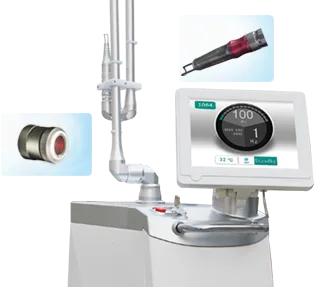
Pmise QE-01
Dual wavelengths (1064nm & 532nm) are convenient to adjust by touching LCD. Multi-spot size (1-7mm) is ideal for a wide…
View details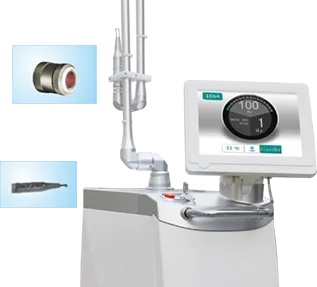
Pmise QE-02
Dual wavelengths (1064nm & 532nm) are convenient to adjust by touching LCD. Multi-spot size (1-7mm) is ideal for a wide…
View details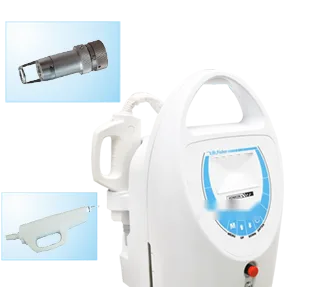
Pmise QN-05
Patented technology of single lamp and dual rods doubles energy output (400mj). Shorter pulse width (6-8ns) than ordina…
View details