Buying a professional facial machine for your clinic? Start with one rule: match the technology to the treatments you actually sell. A water-oxygen jet, a hydra peel, or a multifunction IPL/RF platform all look sharp on a spec sheet. But they don't all fit the same client base. This guide lays out the choices before you commit.
What counts as a professional facial machine?
A professional facial machine isn't just a steamer or a magnifying lamp. It delivers an active treatment—deep cleansing, exfoliation, infusion, lifting, or light energy—and it's built for repeated clinic use. Three types dominate modern treatment menus:
- Water-oxygen jets that spray a fine mixture onto the skin.
- Hydra/aqua peel systems that combine vacuum exfoliation with serum infusion.
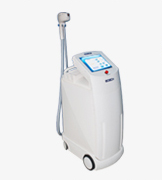
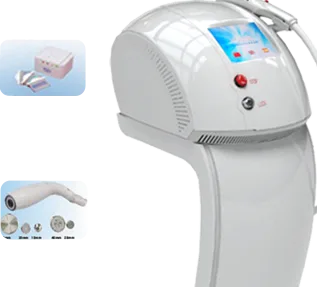
- Multifunction platforms that pack IPL, RF, or vacuum into one chassis.
Each type solves a different problem. The water-oxygen jet comes to mind when acne and dull skin dominate your schedule. A hydra peel is the go-to for clogged pores and that instant glow clients ask for. A multifunction unit? That's for the clinic owner who says, "I want one machine to do four things."
Water-oxygen jet vs hydra peel vs multifunction: the real differences
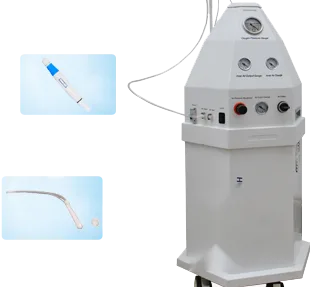
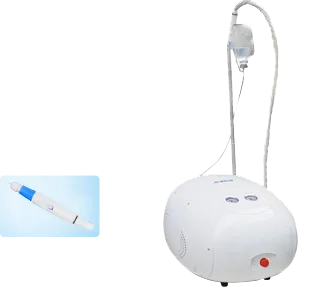
Don't compare these by price alone—compare by what happens to the skin. Our water-oxygen jet documentation lays out a treatment that mixes water, medical oxygen, and nutrition liquid, then sprays it at roughly 200 m/s. The mixture forms 50–80 μm droplets that reach into the follicle and sebaceous gland. That action supports acne clearance, deep cleaning, and nutrient replenishment. It's a targeted treatment—not a generalized facial.
A hydra peel uses a different mechanism: vacuum extraction plus infusion. Think of it as a wet microdermabrasion with a serum step. Clients who want visible smoothness and hydration often respond right away. That's based on our clinical experience, not a controlled trial. Clinic operators like it because the protocol is repeatable.
Multifunction IPL/RF platforms offer the opposite trade: breadth over depth. One unit can usually do skin rejuvenation, hair removal, acne treatment, or skin tightening, but each modality is less specialized than a dedicated system. If your clinic already runs several different facials, a multifunction platform can fill gaps without adding three carts. Read our multifunction beauty equipment guide before buying an all-in-one.
Quick comparison:
| Machine type | Strongest at | Weak spot | Typical consumable |
|---|---|---|---|
| Water-oxygen jet | Acne, sebaceous cleansing, oxygen infusion | Narrow treatment range | Serum/nutrition liquid, sterile water |
| Hydra/aqua peel | Exfoliation, hydration, instant glow | Less effective for vascular or pigmented lesions | Disposable tips, serum bottles |
| Multifunction IPL/RF | Multiple revenue streams from one device | Shallower results per modality for some uses | Flash lamps, filters, gel |
No single row wins. The right choice is the one that matches what's already on your appointment book.
Match the machine to your service menu and client base
Here's the question that saves money. What do your clients already ask for? If acne and congested skin fill your week, a water-oxygen jet or hydra peel earns its place. If clients ask for "a bit of everything"—vein reduction, hair removal, collagen stimulation—a multifunction platform makes more sense than three separate esthetician machines. Don't buy a machine just because a competitor has one.
Look at your top five treatments. Then ask whether a new machine extends those treatments or creates a new category. A busy salon running back-to-back facials needs short treatment times and easy consumable swaps. A medical clinic with longer appointments can handle a steeper learning curve and more parameter control. The machine must fit how you work, not the other way round. Ask your front desk staff which requests keep coming up; they know the real demand.
A dermatology-focused clinic sees more acne and rosacea; a beauty lounge sees more dullness and dehydration. Your machine should serve the client you actually have, not the client you hope to attract.
Operator training is the thing people forget. Our technical documentation for the water-oxygen system specifies treatment distance and pressure ranges—0.3–0.6 MPa air pressure, 0.3–0.5 cm handpiece distance for peeling, 0.5–1.0 cm for rejuvenation. Those settings require practice. A machine that ships without clear protocols will eat staff time.
Single-purpose vs multifunction: which one actually wins?
It depends on floor space and client flow, not marketing. A single-purpose hydra peel often produces better, faster results for that one treatment. It's simpler to master. It's easier to clean. But it sits idle if demand is low. A multifunction platform is the opposite: it reduces the number of machines you need, but each protocol may take longer to learn and the output per treatment is sometimes less specialized. That's why you'll see both in busy clinics.
Think about your clinic's physical footprint. Three dedicated machines need three power outlets, three carts, and three sets of accessories. A single multifunction unit might replace two of them. That's a real operational saving. But if one module fails, you lose multiple services. A single-purpose unit fails small. That's the trade-off.
If you're a new clinic, start with one dedicated machine that solves your highest-demand problem. Add a multifunction platform later when you know your referral patterns. A skin analyzer system can also help you capture baseline data before you sell the treatment, reducing upsell guesswork.
If you're an established clinic with a full schedule, a multifunction unit often slots in as a back-up or a premium add-on. It rarely replaces your workhorse.
Consumables, footprint, and the hidden costs
Here's the thing: don't evaluate the sticker price. Evaluate cost per treatment. A machine that looks cheap but needs proprietary single-use tips, pricey serums, or frequent lamp replacements can end up costing more over two years than a mid-range unit with reusable handpieces. That's why smart buyers ask for a two-year cost projection, not a monthly payment.
A hydra peel tip might cost a few dollars each, but if you use two per client, that's your real per-treatment cost. Ask the supplier for a sample consumable calculation. Then do the math for a full week, not just one session.
Water-oxygen jets use purified water, nutritional liquid, and occasionally medical-grade oxygen. Hydra peels need disposable spiral tips and serum vials. Multifunction IPL/RF devices need replacement flash lamps and cooling gel. Ask for the consumable list before you buy, not after. Ask what happens if a part fails. Is there local service support? How long does shipping take?
Footprint matters more than you think. A treatment room with a couch, a trolley, and a client chair can't fit a wide cart. Check the machine's width and height. Our water-oxygen jet has a light portable design with the air source separated from the main unit, which helps when you move it between rooms. That's a detail worth verifying on any demo. Measure your doorways too—some machines won't clear a standard clinic door.
Also consider cleaning and downtime. A hydra peel waste canister needs emptying between clients. An IPL handpiece needs a calibrated flash count. Every machine has a maintenance rhythm. Write it down. Cheap facial equipment that arrives without a manual or after-sales support quietly wastes hours.
What to verify before you buy
- Ask for a live demo on skin, not just a video.
- Request the operator manual and check protocol clarity. Our internal manuals specify handpiece angle, distance, and pressure ranges; you want that level of detail.
- Confirm consumable cost per treatment and minimum order quantity.
- Check electrical and safety certifications for your market. Laser and intense light devices are regulated differently. A supplier who can't explain compliance is a risk.
- Verify after-sales support, warranty terms, and software update policy if the unit has a screen.
- Ask about training: live, video, or none. Training quality often decides whether a machine gets used or sits in a corner.
One last point: ask for a reference clinic in your region. You don't need a name—you need to see the machine in daily use. If a supplier can't arrange that, keep looking. A supplier who trusts their equipment won't hesitate to give you a reference.
Frequently Asked Questions
Which professional facial machine is best for a new clinic?
A dedicated hydra peel or water-oxygen jet is usually the safest first purchase. It solves a visible problem—congestion, rough texture, or acne—and is easier to train staff on than a multifunction platform. Start with one high-demand treatment. Add breadth later when revenue supports it.
How much do consumables really cost?
It varies by machine type, but budget per treatment, not per month. A water-oxygen jet consumes water, serum, and possibly oxygen. Hydra peel uses disposable tips and serum bottles. IPL/RF units wear flash lamps. Ask your supplier for a cost-per-session estimate and a consumable lifespan table before you commit. That number matters more than the sticker price.
Can one multifunction facial machine replace separate devices?
Partly. A quality multifunction platform can cover hair removal, skin rejuvenation, acne, and tightening in one chassis, but dedicated systems often produce deeper or faster results for a single indication. Use a multifunction unit as a space-saving complement or a secondary revenue stream, not always as a full replacement for a workhorse device.
What safety checks should I run on any esthetician machine?
Verify electrical safety and the device class for your market. Ask about operator protective eyewear for light-based modalities. Request a patch test protocol. Our documentation for the water-oxygen jet includes specific distance and pressure limits to reduce erythema risk—suppliers should provide equivalent guidance. If they don't, that's a red flag.
Related reading
Pmise Technical Team — helping device buyers compare the engineering details that matter.