
Before you wire the deposit, get the laser machine warranty in writing. One year on materials and workmanship is the usual baseline, but that document is maybe a quarter of the story. Consumable cost, parts stock, remote support and operator training decide whether the machine keeps earning.
An idle laser costs you rebooked patients and paid staff hours, and that risk is rarely a warranty question at all. So the questions below cover the whole after-sales chain: what the cover includes, which parts wear out and how fast, and how quickly a replacement reaches you.
What does a laser machine warranty actually cover?
Standard cover is defects in materials or workmanship, under correct use and maintenance, for a fixed term. One year from the date of purchase is the baseline written into our device manuals, with paid maintenance afterwards. Anything the user causes sits outside it.
Read the exclusion list first. That's where claims are decided. Our archived warranty terms rule out impact, vibration, drops, wrong operation, repair by an unauthorised workshop, and a missing or altered warranty card. The CO2 manual in the same archive puts the scanner, foot switch and articulated arm outside free service, plus freight both ways. Small print, big invoices.
Handpiece cables deserve their own line. Our manuals single out the handle and its treatment tube, because excessive bending of that tube is a documented failure mode and not a warranty item. Coil the cable. Never pull it.
Ask for the written warranty terms before you order, not with the crate. If exclusions and consumable coverage only ever get explained on a call, you already have your answer.
Extended warranty or paid service contract: worth the money?
Nearly every supplier will sell you cover beyond year one. Compare those quotes on three things before judging the price. First, the billing basis: a flat annual fee, or a percentage of the machine value, and whether you pay per year or once up front. Second, scope: consumables such as lamps and handpieces included, or only boards, drivers and labour? Most contracts exclude consumables, and that one line shifts the maths more than the headline figure does. Third, logistics: who pays freight both ways, and is an on-site engineer visit included or billed separately.
The decision rule is straightforward. High weekly treatment volume, no competent independent engineer in your country, or a model at real risk of being discontinued? Lean towards the contract. Modest volume with a local technician you trust? Spend the same money on a shelf of critical spares instead. Two questions buyers forget: does the cover restart the clock on a replaced part, and does it oblige you to use original parts only?
Which parts are consumables, and how long do they last?
Consumables wear out with use and almost never fall under warranty. Budget for them from day one. Over three to five years they routinely cost more than the price gap between the machines you're weighing up.
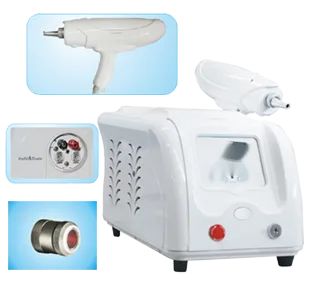
- Flash lamps. IPL systems and lamp-pumped lasers fire a xenon lamp. The instruction manual for the lamp-pumped dual-wavelength 1064nm/532nm Q-switched Nd:YAG platform in our engineering archive, the device class behind the Pmise QN-09, puts lamp life at about 1,000 firing hours at the manual's rated parameters, with the cooling loop maintained and the optics clean. Past that, laser energy drops and the manual says fit a new lamp rather than turn the settings up. The maintenance manual for our E-Light IPL platform rates its xenon lamp at roughly 60,000 flashes at moderate energy, and adds that hair removal runs high parameters, so results can fall off nearer 30,000 shots.
- Handpieces. A leaking IPL handpiece, according to that same E-Light maintenance manual, means a broken internal water pipe or a damaged xenon lamp or quartz tube, and that goes back to the factory, not onto your bench.
- Optics and filters. Focus lenses and IPL filters foul with gel, debris and fluid. The Q-switched Nd:YAG instruction manual makes this a standing precaution: when laser energy decreases, take out the focus lens and clean it with 95% alcohol before you assume the source is dying.
Use the shot counter. The user manual for our EO Q-switched Nd:YAG platform, the same family as the QN-09, describes a two-line display: total shots from 0 to 9,999,999 on the first line, single-session shots on the second, resetting at power-off. That's a real usage log, not a guess. Ask where it sits on the interface you're quoted.
How do you work out the real cost per treatment?
Price the machine by what one session costs you to deliver, not by the number on the quotation. A cheap unit with scarce, pricey consumables loses to a dearer one with well-stocked parts.
- List every consumable for that model, with its stated life in hours, flashes or cycles.
- Get unit prices in writing, freight and duty included.
- Turn a realistic monthly treatment volume into a replacement calendar.
- Divide annual consumable spend by annual treatments. That figure belongs in your pricing.
Treat archived manual figures as a starting point, not a promise. A number written for a machine built in 2012 may not describe the unit shipping to you now, so confirm current lifespans for the model on your quote. Our breakdown of laser machine running costs and consumables works the arithmetic through.
Are the parts in stock, and how fast can they ship?
Parts availability, not warranty length, decides your downtime. Twelve months of cover is cold comfort when the replacement handpiece takes six weeks plus a customs argument. Ask narrow questions, in writing.
- Do you hold lamps, handpieces and control boards in stock, or build to order?
- What's the door-to-door lead time for a lamp or handpiece to my country?
- How many more years will you produce parts for this model?
- Can I buy a starter kit of critical spares to keep on the shelf?
A supplier that names stock levels and quotes lead times in days is telling you how long it will stand behind the machine. Vague answers turn into long waits.
What after-sales support should you expect?
Most faults never require the machine to travel. A lamp that won't fire, a handpiece that stops cooling, a slow energy drop traced to a dirty lens: all diagnosable at a distance when the documentation is good. Our E-Light service documentation is built around fault tables covering no power, weak energy, no handpiece cooling, water leaks and error codes, so a technician on a video call can walk your operator through them.
| Support element | What to confirm before you order |
|---|---|
| Remote diagnosis | Live video troubleshooting, a named contact, hours overlapping your clinic day |
| Documentation | English service manuals and parts diagrams, supplied with the unit |
| Response time | How fast a technician replies, and who it escalates to |
| Warranty logistics | Who pays freight both ways, and how returns are authorised |
| Local service | Whether an independent engineer may open the unit, and what that does to cover |
One regulatory point matters if you plan to use a local engineer. In its 2024 final guidance on remanufacturing of medical devices, the US FDA separates servicing, which returns a device to its original specification, from remanufacturing, which changes performance, safety or intended use. Fitting a like-for-like lamp is servicing. Rebuilding a handpiece around different optics isn't.
Our service and support page covers how documentation, remote diagnosis and parts requests work after delivery.
Does the supplier train your operators?
Training protects your results and your warranty at once. Plenty of out-of-warranty repairs trace back to how the device was used: energy too high, cooling skipped, a cable bent past its limit. Ask what's included. Protocols per indication, starting parameters by skin type, cleaning routines, safe handling of the handpiece. Remote or on site? Does it cover the therapist you hire next spring? IEC 60825-1, the standard for laser product classification, also requires manufacturers to supply the information users need for proper precautions, including labelling and instructions.
Your pre-purchase checklist
Send this to every shortlisted supplier and compare the replies side by side. What they leave out tells you as much as what they answer.
- Warranty term, what starts the clock, and the full exclusion list
- Extended warranty or service contract: price, billing basis, what it covers, and whether it demands original parts only
- Named consumables with lifespans and unit prices, in writing
- Confirmed parts stock and shipping lead time to your country
- How long parts will keep being produced for this model
- Support channel, hours, language and response time
- English service documentation in the box
- Operator training scope and refresher policy
- Freight responsibility on in-warranty repairs
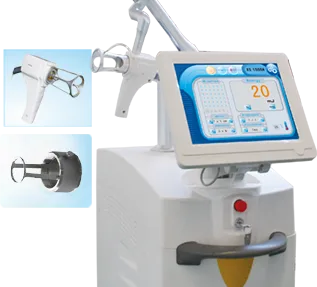
Match the plan to the technology. For Q-switched Nd:YAG, lamp hours and handpiece lead time are the numbers to pin down. A fractional CO2 system such as the Pmise CF-01 is a different conversation: our internal comparison note on RF-excited versus glass-tube CO2 sources rates glass-tube life in hundreds of hours against tens of thousands for an RF-excited metal tube under normal rated operating conditions. Compare the Pmise product range, then read our notes on buying aesthetic lasers from a China manufacturer.
Frequently Asked Questions
How long is a typical laser machine warranty?
One year of free cover on material and workmanship defects, under correct use, is the common term and the standard written into our device manuals. Paid maintenance usually continues for the life of the machine. Confirm what starts the clock, and get the exclusion list in writing.
Are flash lamps and handpieces covered by warranty?
Normally not. Lamps, handpieces, optics, filters and fluids wear with use, so they sit outside standard cover. The instruction manual for our lamp-pumped Q-switched Nd:YAG platform rates its xenon lamp at about 1,000 firing hours at rated parameters with cooling maintained; our E-Light IPL maintenance manual rates its lamp at roughly 60,000 flashes at moderate energy. Some manuals also charge key parts such as foot switches at cost.
What happens if a part fails and I'm nowhere near the supplier?
Most faults get diagnosed remotely using the troubleshooting tables that ship with the machine, then fixed by swapping in a stocked part. Parts inventory, shipping lead time and a contact who answers matter far more than distance on a map. A small kit of spares on site cuts worst-case downtime.
Can I use third-party consumables to cut cost?
Be careful here. Non-original lamps, handpieces or optics can shift energy output, shorten the life of nearby components, or damage the system, and fitting them typically voids the warranty. There's a regulatory angle too: the FDA treats work that changes a device's performance or intended use as remanufacturing, not servicing.
Pmise Technical Team. We manufacture and service laser, IPL and RF aesthetic systems for clinics and distributors worldwide; this guide draws on our own device documentation and service records.