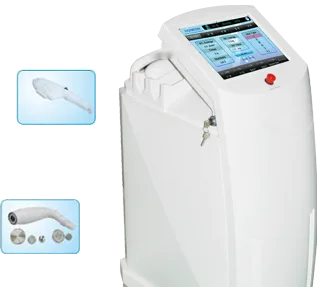
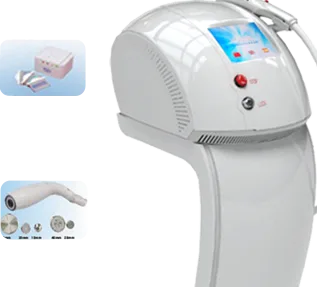
A single IPL beauty equipment platform can run six paid services from one cabinet: hair removal, photorejuvenation, pigment correction, vascular clearance, acne support, and E-light skin tightening. That's the whole commercial case for intense pulsed light. Swap a filter, change the handpiece, and the same room earns from a different service. This guide walks through what each of the six treats, which configuration suits which clinic, what the platform actually costs to run, and where it stops being the right tool.
What is IPL beauty equipment, and how is E-light different?
IPL isn't a laser. A laser fires one coherent wavelength; IPL fires a broad band of visible and near-infrared light, filtered so that the part you keep lands on the target you care about. Melanin in hair and pigmented spots absorbs it. So does haemoglobin in small vessels. The absorbed light turns into heat and damages the target without breaking the skin surface. Underneath all of it sits selective photothermolysis, the principle Anderson and Parrish set out in Science in 1983 (Anderson RR, Parrish JA, Science 220:524-527): match the light to what the target absorbs, control the pulse, keep the heat where you want it.
E-light is IPL plus radiofrequency in the same pulse. The optical energy triggers the skin's own repair response and works on capillaries and pigment, while RF excites water molecules in the dermis and the resulting heat tightens tissue and softens wrinkles. Our own device documentation puts the working tissue temperature for that RF pass at roughly 45 to 65 degrees Celsius, enough to contract collagen and drive later re-growth. Treat that as a manufacturer operating figure from our engineering archive, not a published clinical constant. Pure IPL can't do that part at all. Filters handle the rest of the switching: on the Pmise MF-06, one filter-changeable handpiece covers roughly 610-1200nm for hair removal, 585-1200nm for vascular lesions and 530-1200nm for rejuvenation, according to its specification sheet in our archive.
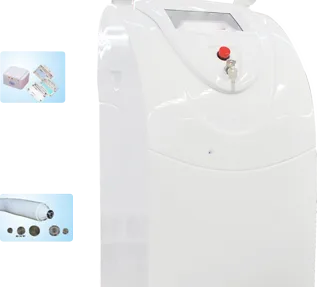
The six treatments one IPL and E-light platform delivers
Each of the six below is a separate line on your price list. None of them needs a second machine.
| Service | Primary target | How the platform delivers it |
|---|---|---|
| Hair removal | Melanin in the follicle | Hair-removal filter; larger spot handpiece for speed |
| Photorejuvenation | Overall tone and texture | Rejuvenation filter, full-face light pass |
| Pigment correction | Melanin in freckles and sun spots | Rejuvenation or pigment filter; lesion darkens, then sheds |
| Vascular clearance | Haemoglobin in small vessels | Vascular filter for spider veins, redness, rosacea |
| Acne support | Inflammation and vascular component | Light pass alongside a medical skincare plan |
| Skin tightening | Dermal collagen | E-light pulse or dedicated cooling RF handpiece |
You can see the full application range on the HPT E-light platform page, and the wider multifunction IPL and RF range pairs filter-changeable light handpieces with a cooling RF handle.
1. Hair removal
Hair pays the bills. It's the highest-volume IPL service in most clinics and the one that keeps a diary full week after week. The hair-removal filter passes light that follicular melanin soaks up readily. Hair grows in cycles, though, and light only does useful damage to follicles in their active growth phase, so a course spread over weeks is unavoidable. Our archive is blunt about the ceiling: no IPL system clears 100% of hair. What a proper course delivers is substantial, lasting reduction, with whatever survives coming back finer and paler. Dark hair on fair skin responds fastest. Coarse legs and backs go quicker with a large spot, which is why the Pmise MF-05 carries a 15mm x 60mm handpiece purely for hair work alongside its 8mm x 40mm three-filter handpiece.
2. Photorejuvenation
Photorejuvenation treats the whole face rather than one mark. With the rejuvenation filter fitted, a full-face pass hits scattered pigment and diffuse redness in the same session, and the complexion reads more even afterwards. Sessions are quick. Downtime is minimal. That combination makes it an easy maintenance service to sell as a package, and results build across a course rather than arriving all at once. Plenty of clinics bolt an E-light tightening pass onto the same appointment and charge accordingly.
3. Pigment correction
Flat, benign marks are IPL's sweet spot: freckles, sun spots, general surface pigmentation. Melanin absorbs the light, the lesion goes darker straight after treatment, sometimes nearly black, then flakes and falls away over the following weeks. The treatment notes in our engineering archive give a window of roughly 7 to 28 days depending on body area, and some marks simply fade rather than shed. Those timings are our own manufacturer guidance for our platforms, drawn from device documentation rather than from a published trial, so present them to clients as a typical range and not a promise. Warn people about the darkening stage before you fire the first shot, not after. Deeper dermal pigment is a different job, and a Q-switched laser handles it better. Our freckle removal guide covers where the line sits.
4. Vascular clearance
Facial spider veins, broken capillaries, diffuse redness, rosacea: the vascular filter tunes the output toward blood absorption. Response varies more than clients expect. Some vessels vanish on the spot, others turn grey or purplish first, and diffuse redness usually looks angrier immediately after the pass before settling over the following weeks. Our device treatment notes describe a lightening period of roughly two to three weeks and recommend a short weekly series rather than one heroic session. Again, that's manufacturer operating guidance from our archive; published clinical reviews of light-based vascular work agree only on the broader point, which is that several sessions are normally needed and outcomes vary by vessel size and skin type.
5. Acne support
Be careful how you sell this one. A light pass can calm the redness and vascular component of inflamed lesions, and it fits neatly beside a proper medical skincare plan. It isn't a cure, and marketing it as one will cost you trust. Frame it as gradual improvement over several sessions, managed alongside whatever topical or oral treatment the client is already on. Our acne treatment solution page sets out how light-based work slots into a broader protocol.
6. Skin tightening with E-light
This is the service that justifies E-light over plain IPL. Either the combined light-and-RF pulse or the dedicated cooling RF handpiece heats the dermis into the collagen-contraction range described in our manuals, giving firmer skin now and rebuilt collagen later. The cooling RF handle on the MF-05 ships with five tips, three monopolar and two bipolar, so depth can be matched to a jawline or a stomach. One cabinet, and suddenly you're offering lifting and wrinkle work too.
Which Pmise platform fits which clinic?
Choose on room count and service mix, not on whoever's spec sheet is longest. All three below combine filter-changeable IPL with a cooling RF handle for E-light tightening.
- Pmise MF-05: two IPL handpieces, one filter-changeable at 8mm x 40mm plus a 15mm x 60mm for fast hair work, and an RF handle with monopolar and bipolar tips. A solid all-rounder for one busy room.
- Pmise MF-06: a filter-changeable handpiece running the hair, vascular and rejuvenation filters with sapphire contact cooling, backed by a cooling RF handpiece at 2.6MHz and up to 120W. A tidy workhorse for tone, pigment and vessels.
- Pmise PE-01: adds homogeneous pulse technology, so pulse energy stays steady and predictable from the first shot of the day to the last. Worth the premium where daily volume is high and consistency matters more than the sticker price.
Still building a first treatment menu? Our clinic equipment list shows how an IPL or E-light platform sits next to pigment and body-contouring devices, and HPT versus vacuum E-light versus IPL compares the three delivery styles head to head.
What should you check before buying an IPL or E-light platform?
Configuration is the easy half. The half that decides whether the machine makes money is consumables, training and after-sales, and almost nobody asks about those until the first lamp dies. Work through all ten points below with the supplier, in writing, before the deposit leaves your account.
- Filter set. Confirm the exact cut-off filters supplied, so one handpiece genuinely covers hair, vascular and rejuvenation work. Ask whether extra filters are stocked separately and what they cost.
- Cooling. Sapphire contact cooling protects the epidermis and makes sessions bearable. It matters most on the skin types where you have least margin for error. Ask how the cooling loop is maintained: our own manuals warn that careless water changes, especially filling with very cold water, can damage the xenon lamp and filter tube.
- Spot size. A large window clears a back quickly; a smaller one gives you control around the nose and eyes. Most clinics need both.
- RF configuration. Monopolar plus bipolar tips let you serve superficial and deeper tightening from the same handle.
- Lamp and handpiece life, in writing. The xenon flash lamp is a consumable. Ask the supplier for the rated shot count of the lamp, the price of a replacement lamp and of a complete handpiece, and whether a lamp swap is a field job your technician can do or a return-to-factory job. Get those three answers on the quotation, not in a chat message. Any supplier who quotes a lifetime figure but won't write it down has told you something useful.
- Running cost per session. Build the number yourself: replacement lamp price divided by rated shots, times the shots a treatment takes, plus gel, plus the time. Chair time is the part people forget. The operation manual for the platform we sell as the Pmise PE-01 sets a 3 to 5 second interval between shots, with IPL energy adjustable from 10 to 100 percent in 10 percent steps, and every full-face pass is a lot of shots. Multiply it out and you'll know how many clients an hour a room can really handle. Our running cost and consumables guide works through the same arithmetic for other device classes.
- Operator training and safety kit. Our manuals are blunt on this: all operators must qualify the training before treating. Ask what training comes with the machine, in what language, and whether it's on site, remote or a video file. Confirm goggles and eye patches ship in the box; our device documentation requires eye protection for the client and goggles for the operator during IPL work, though not for RF-only passes. Check the manual you'll receive contains the test-spot routine too. Ours calls for two or three test shots on the chin or under the earlobe with the reaction watched over the next few minutes, and a longer wait of one to three days where photosensitivity is suspected. See our clinic laser safety essentials for the wider room protocol.
- Skin-type limits. IPL is most predictable on lighter Fitzpatrick skin types, the I to VI sun-reactive classification described by Fitzpatrick TB in Archives of Dermatology in 1988, which grades skin by how readily it burns and tans. On darker skin, epidermal melanin competes for the light, and our archive lists very dark skin among the contraindications outright. Test spots and conservative settings are not optional.
- Certification and the regulatory route for your market. IPL isn't a laser, so the electrical safety standard that applies is IEC 60601-2-57 for non-laser light source equipment used in therapeutic and cosmetic applications. Ask which edition the test file was built against. For Europe, ask whether the CE mark is a medical device CE under the MDR and who the notified body is; for the United States, ask whether the device has FDA 510(k) clearance and for which indications, since light-based cosmetic systems are regulated there as medical devices. Then check your own national registration, which is frequently the long pole. Our FDA 510(k) versus CE guide explains the two paths.
- Warranty, spare parts and support. Ask for the warranty term in months, and read the exclusions: our manuals carry a separate non-warranty section, and consumable parts such as lamps normally sit outside cover everywhere in this industry. Ask for the accessory and spare-part list, which for these platforms typically runs to treatment handpieces, cooling heads, overflow pipe, water injector and connectors, then ask the lead time on each. Finally, ask how remote support works: who answers, in what language, and how quickly. Our warranty and spare parts guide lists the clauses worth negotiating.
For the physics sitting behind every parameter you'll ever set, read what selective photothermolysis actually means.
Get a quote or full spec sheet
Want the configurations compared against your own treatment menu? Ask us for a quote or spec sheet on the Pmise MF-05, MF-06 or PE-01 and you'll get filter details, RF handpiece options, consumable pricing, warranty terms and lead times. Distributors can ask about sample-machine terms, OEM branding and after-sales support. Tell us your room count and the services you plan to run, and we'll point you at the platform that fits.
Frequently Asked Questions
Is IPL the same thing as a laser?
No. A laser emits a single coherent wavelength, while IPL emits a broad band that filters narrow toward a chosen target. That breadth is exactly what lets one platform move between hair, pigment and vascular work with a filter change. Lasers win on precision for specific jobs such as deep dermal pigment or tattoo ink, which is why many clinics end up running an IPL or E-light platform alongside a Q-switched system.
How many sessions do IPL treatments need?
It depends on the service and on the client's hair and skin colouring. Hair removal needs a course spread over weeks because light only affects follicles in their active growth phase. Vascular and pigment work respond gradually too, and the treatment notes in our archive recommend a short weekly series for vascular cases. Nobody should be sold a single-visit fix. Clinical reviews of light-based treatment agree on the same broad point: several sessions, variable outcomes.
What does E-light add over standard IPL?
Radiofrequency. The RF component heats the dermis to the range where collagen contracts and later rebuilds, which our device manuals specify as an operating temperature band and which plain IPL doesn't achieve. In practice it means one platform adds firming and wrinkle-softening services to the standard IPL menu, using the same cabinet and the same treatment room.
What paperwork should I ask a supplier for?
Four things. The declaration of conformity and test reports against the applicable safety standard for non-laser light sources, the clearance or registration status in your target market (the US FDA regulates these systems as medical devices, and 510(k) clearance is indication-specific), the warranty document with its exclusions, and a priced spare-parts and consumables list. If a supplier stalls on any of the four, that's your answer.
Pmise Technical Team. We design, build and support IPL, E-light and laser platforms for clinics and distributors worldwide, and this guide draws on our own engineering and treatment documentation.