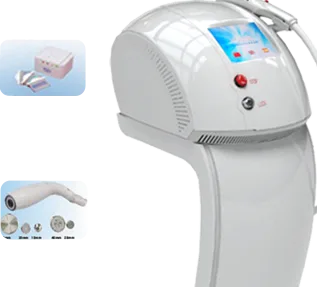
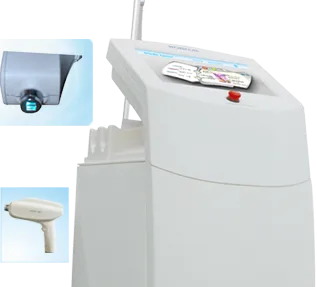
Your aesthetic laser ROI comes down to four inputs: the price you charge per session, how many sessions the machine actually runs, what each treatment costs you to deliver, and the total landed cost of the device. Nail those four and the payback period stops being a guess.
Vendors love quoting a payback figure. Treat it as marketing. Your market sets the price, your front desk sets the volume, and nobody in a factory sales office knows either. Below is a worksheet you fill in yourself, plus the levers that decide whether a laser becomes clinic profit or expensive furniture.
What actually drives aesthetic laser ROI?
ROI is contribution margin per session multiplied by session volume, measured against what the machine cost you to own and run. Everything else is detail. Five inputs carry the whole model, and only two of them live inside the machine.
| ROI lever | Who controls it | How far you can move it |
|---|---|---|
| Session price | Market and positioning | Limited, bounded by competitors |
| Utilisation, meaning paid sessions per week | The clinic | High, this is the main lever |
| Consumable cost per session | Device design and supplier | Moderate, check wear parts before buying |
| Staff and room cost per session | The clinic | Moderate, faster treatments help |
| Total landed cost | Procurement | One-time, negotiate hard once |
Read the middle column again. Most of what decides your return is a business decision, not a spec. Two clinics can buy the identical device and end up with completely different payback stories.
How do you estimate the payback period?
Payback equals total landed cost divided by the monthly contribution the device throws off. Contribution per session is the session price minus the variable cost of delivering it. Work through it in this order and don't skip step one.
- Write down the total landed cost. Quoted price, freight, import duties, installation, operator training. Not the ex-works number.
- Set a session price you can actually charge. What you bill today, or what the clinic down the road bills. Aspirational pricing ruins the model.
- Subtract the variable cost per session: consumables, plus the staff and room time the treatment consumes.
- Estimate monthly sessions twice. Once for the ramp-up months, once for steady state.
- Divide landed cost by monthly contribution. That's payback in months.
Here's the sheet. Fill the last column with your own figures, in your own currency. The letters are placeholders, not industry data. No factory can honestly fill them in for you.
| Symbol | Variable | Unit | Where the figure comes from | Your figure |
|---|---|---|---|---|
| A | Session price | currency per session | Step 2. What you bill today, or local comparable pricing | ______ |
| B | Consumables per session | currency per session | Step 3. Gel and tips, plus lamp or handpiece life amortised per shot | ______ |
| C | Staff and room per session | currency per session | Step 3. Operator minutes plus allocated room overhead | ______ |
| D | Total landed cost | currency | Step 1. Device, freight, duty, installation, training, finance charges | ______ |
| E | Sessions per month | sessions | Step 4. Ramp-up figure first, steady-state figure second | ______ |
Two lines of arithmetic finish the job:
- Contribution per session = A - (B + C)
- Payback in months = D / (Contribution per session x E)
Run it twice, once with your ramp value for E and once with steady state. Plan around the space between the two answers.
If the numbers only work at full utilisation from day one, they don't work. Model a slow ramp first, then decide.
We don't publish a single "X month payback" headline, because A through E swing enormously between countries and clinic types. A busy device pays for itself quickly relative to its service life. An idle one never does.
Session price or utilisation: which moves the needle more?
Utilisation, almost always. Once you own the laser its cost is largely fixed, so doubling E roughly doubles the contribution it generates. The incremental cost of one more treatment is just a consumable and a slice of technician time. Half-empty machines are the most common reason a payback period drifts far past projection.
Price still matters. It's just harder to move. Push A much above your local competition and volume falls away. Utilisation you can engineer: better scheduling, sharper marketing, more trained operators, and a device that answers more than one demand.
How do consumables and staff time quietly erode clinic profit?
These are the two costs that turn a healthy headline margin into a thin real one. Price them before you sign, not after the first lamp dies.
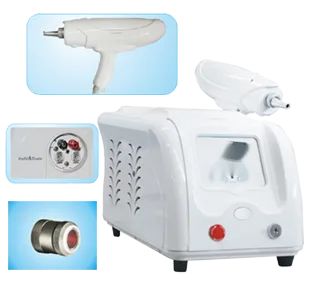
Start by asking which parts wear out. Our device manuals for a Q-switched Nd:YAG platform put the xenon pump lamp's service life at around 1,000 operating hours, and warn that output energy falls off past that point. That isn't a defect. It's a scheduled cost, and it belongs in line B from day one. Diode systems wear differently, though different never means free. The spare-parts price list in our engineering archive for an 808 nm diode platform makes the point plainly: the treatment handpiece is by far the costliest replaceable item, an order of magnitude above the control board. A supplier who won't hand you that list with prices has told you something useful.
Staff cost works on a different metric. Track contribution per operator hour, not per session. A treatment that bills well but ties up a room and a technician for a long stretch can earn less per hour than a quick, cheaper one with real throughput. Spot size decides more of this than buyers expect. Our manual for a multifunction radiofrequency plus intense pulsed light platform lists two treatment heads, 8 x 40 mm and 15 x 60 mm. The bigger one covers close to three times the area per pulse. Across a full-leg session that gap becomes chair time, and chair time is money.
One more thing to fold in. Most laser courses need several sessions, so repeat visits shape both your revenue and your staffing load. The physics goes back to the selective photothermolysis principle described by Anderson and Parrish in Science (1983): you heat a target chromophore selectively, and follicles or pigment respond across a course of treatments rather than in a single hit. Our breakdown of running costs and consumables works through the line items.
How do you raise utilisation and shorten payback?
Fill the schedule. That's the whole answer, and the most reliable route is equipment that serves more than one demand. Single-purpose devices are exposed whenever that demand goes quiet.
- Buy versatile platforms. An E-light system pairing radiofrequency with intense pulsed light addresses several concerns from one trolley. A Q-switched Nd:YAG offering both 1064 nm and 532 nm output covers dark pigment with one head and red, coffee or brown lesions with the other. Wider coverage, fuller diary.
- Sell courses, not single visits. Results usually need multiple sessions anyway, so packaging them books future utilisation in advance.
- Train a second operator. A machine only one technician can run goes dark every time she takes leave. Cross-training is cheap insurance.
- Market the treatment, not the machine. Clients don't buy wavelengths. Consent-based before-and-after results and referral incentives keep the room booked.
- Log sessions per device per week. If the line flattens, you have a scheduling or marketing problem, and now you have evidence.
To match a device mix against the demand you actually see, start with our clinic solutions overview, then compare single-purpose and multi-application options across the full equipment range. If hair removal is your anchor treatment, the hair-removal machine pricing guide goes deeper on cost.
Which buying and financing choices protect ROI?
Protect the return at purchase, not afterwards. A broken machine earns nothing while finance payments keep rolling, so downtime risk and landed cost deserve as much attention as the sticker.
- Compare delivered, installed prices. Freight, duties, installation and training add up fast. Line suppliers up on the total landed number or you're comparing fiction.
- Check the regulatory paperwork properly. In the US, a device intended for in vivo treatment faces two separate requirements: the FDA laser performance standard at 21 CFR 1040.10, and medical device clearance such as a 510(k). Clearing one does not cover the other.
- Match the financing term to useful life. Keep repayment comfortably shorter than the device's expected service life, so the machine is still earning after it's paid off.
- Negotiate wear parts and training up front. Included consumables, a spare handpiece and proper operator training all cut your effective cost per session in the year that matters most.
For a full procurement checklist, read our guide to vetting an aesthetic laser manufacturer.
Frequently Asked Questions
How long does an aesthetic laser take to pay for itself?
It depends on utilisation more than anything else. A device running a steady weekly schedule recovers its landed cost far faster than one booked a couple of times a month, and the gap between those scenarios is enormous. Skip the vendor's single figure. Divide your landed cost by the monthly contribution the device generates at your prices, in your city. That personalised number is the only one worth acting on.
What utilisation should I expect from a new device?
Expect a ramp, not an instant full diary. Early months usually run well below capacity while you build awareness, then climb as the treatment establishes itself and course clients return on schedule. Build your model on that conservative ramp. Track sessions per device per week, because the trend tells you whether marketing and scheduling are working long before the accounts do.
Are consumables really a big factor in laser ROI?
They can be, and the profile varies by technology. Lamp-based intense pulsed light and E-light systems run on flash lamps with a finite service life, while diode and solid-state sources wear differently. Before you buy, get a written list of wear parts, service life and replacement prices, then push those into line B. A cheap machine with pricey consumables often beats you over three years.
Ready to put real figures into the worksheet? Tell us the treatment you want to anchor the room around and your destination port, and we'll send back the three things the model needs:
- A delivered, landed quotation for the machine you're weighing up, with freight, packing, installation and training itemised, so line D is a real number instead of an ex-works guess.
- A written wear-parts list: lamp or handpiece service life in hours, replacement prices, and what ships in the box. That's line B, in writing.
- ROI modelling help, where we drop your own session price and your own expected utilisation into this framework and send the completed sheet back.
Send the request through our contact page and say which of the three you want first.
Pmise Technical Team. We manufacture and export diode, Nd:YAG, E-light and fractional laser platforms, and we build ROI models with clinic and distributor clients as part of pre-sale planning.