
Pigment Treatment
Café-au-Lait Macules (CALMs) Laser Treatment: Q-Switched Nd:YAG Protocol
Café-au-lait macules (CALMs) are flat, evenly brown patches present at birth or appearing in early childhood. Effective cafe au lait macules treatment means a pigment-selective Q-switched laser aimed at excess melanin sitting in the epidermis. It works on many lesions. It stalls on others, and recurrence is common enough to say so before the first pulse.
What a café-au-lait macule actually is
A CALM is a benign pigmentation disorder, not a tumour. The border is fairly regular and the colour a uniform light-to-medium brown. Our engineering archive puts the histopathology in a line: epidermal melanin increases, and so does the number of melanocytes.
Most CALMs are congenital or surface in the first years of life, then enlarge as the child grows. They don't raise or pit the skin. No itch, no symptoms, no tendency to fade. Sun and season change how obvious a patch looks.
One caution comes first. Multiple large CALMs can signal an underlying syndrome. Six or more macules larger than 5 mm before puberty, or larger than 15 mm after puberty, is a diagnostic criterion for neurofibromatosis type 1 under the revised international consensus recommendation published by Legius and colleagues in 2021. Refer that patient for assessment instead of booking laser sessions.
Treat one confirmed, bothersome lesion. Don't laser an undiagnosed brown patch, and don't laser a pattern that belongs in a geneticist's clinic.
How a Q-switched laser breaks up the pigment
The physics goes back to Anderson and Parrish, who described selective photothermolysis in 1983. Pick a wavelength the target absorbs strongly, deliver it in a pulse shorter than the target's thermal relaxation time, and surrounding tissue stays intact. Nanosecond pulses shatter pigment granules photoacoustically, and phagocytes clear the fragments away.
Two wavelengths carry the load. A Q-switched Nd:YAG laser fires at 1064 nm and frequency-doubles to 532 nm. A CALM sits in the epidermis, so 532 nm hits it hard and shallow. Why reach for 1064 nm at all? Skin tone. Our device manuals pick by Fitzpatrick type: 532 nm with a spot of at least 3 mm for types II to III, and 1064 nm from type III up, where competing background melanin makes a green beam risky.
Energy density matters more than the display number. Fluence is energy over spot area, so 200 mJ through a 3 mm spot and through a 6 mm spot behave nothing alike. Our archive gives a working rule of thumb rather than a certified limit: CALMs want a single pulse above 400 mJ with a pulse width under 7 ns, and output near 100 mJ is close to useless. Treat both as thresholds to buy against.
Café-au-lait macules treatment protocol and what to expect
Start with a test spot. Somewhere hidden, read several weeks later, before you touch a visible patch. CALMs are unpredictable, and a small number darken or spread instead of clearing. A 2017 JAMA Dermatology case series by Belkin and colleagues found lesion shape predicts response: irregular "coast of Maine" borders tended to do better than the smooth "coast of California" type. Useful for counselling. Not a guarantee.
The endpoint in our device protocol is deliberately gentle. Work up from around 200 mJ and stop when the area turns light red with pigment visibly scattered. You aren't chasing whitening, and certainly not blood. Push the fluence and you get oozing, then post-inflammatory pigmentation. Worse than the mark you started with.
| Parameter | From our device protocol |
|---|---|
| Wavelength | 532 nm for Fitzpatrick II to III; 1064 nm for type III and above |
| Spot size | At least 3 mm |
| Repetition rate | 3 to 10 Hz |
| Starting energy | Around 200 mJ, titrated up to endpoint |
| Endpoint | Light redness, pigment visibly scattered, no bleeding |
| Interval | Roughly 45 to 60 days between sessions |
| Course | Commonly 6 to 8 sessions |
| Outcome | Variable: partial to good fading, with a real relapse risk |
Fading is gradual. Pigment usually looks lighter around four weeks on, so intervals run long. Downtime is short and a light scab is normal. An ultra-pulse CO2 or 2940 nm Er:YAG laser can also lift a CALM, though our archive warns to be careful above Fitzpatrick III.
Recommended Pmise equipment
Energy headroom, a short pulse, both wavelengths on one console. Two families in our range fit, and they sit differently against those two thresholds.
Our EO Q-switched Nd:YAG systems give the most margin. The Pmise QE-01 is specified at up to 800 mJ single pulse at 1064 nm and up to 400 mJ at 532 nm, with a fixed 6 ns pulse width, a 1 to 7 mm spot and 1 to 10 Hz. Its 1064 nm output doubles the 400 mJ floor, and 6 ns is a single figure rather than a range, so it stays under the 7 ns rule at every setting. The panel steps energy in 40 mJ increments, handy for slow titration.
The Pmise QN-05, from the Q-switched Nd:YAG platform range, is the compact option: 1064 nm and 532 nm, 1 to 6 mm spot, 1 to 5 Hz, water plus air cooling. Read its numbers honestly against the archive rule. Single pulse tops out at 400 mJ, which sits at the floor and not above it, and pulse width is quoted as a 6 to 8 ns range, so the sub-7 ns requirement is only partly satisfied and is not guaranteed at every setting. Both figures are boundary cases. The single-lamp twin-rod design does stack to 800 mJ in double-pulse and 1200 mJ in triple-pulse mode, so double-pulse is the setting that clears the energy threshold here. Want both thresholds cleared without any qualification? Specify the QE-01, with its fixed 6 ns pulse and 800 mJ single pulse.
- Energy: the QE-01 delivers up to 800 mJ on a single pulse at 1064 nm. The QN-05 reaches 400 mJ single pulse, which is the floor, and needs double-pulse mode (800 mJ) or triple-pulse mode (1200 mJ) to go past it.
- Pulse and spot: 6 ns fixed on the EO line with a 1 to 7 mm spot; a 6 to 8 ns range and 1 to 6 mm on the QN platform.
One console covers neighbouring indications. Compare our nevus of Ota protocol for a dermal pigment case, and read the longer walkthrough on café-au-lait laser treatment.
Next step: ask a Pmise engineer for the QE-01 and QN-05 spec sheets plus our CALMs parameters. Send your typical patient skin types and we'll quote the configuration.
What buyers ask before they order
Clinical fit is half the decision. The rest is paperwork and service.
- Certification: our quality system is certified to ISO 9001 and ISO 13485, and our Nd:YAG systems carry CE documentation: EMC and LVD test reports plus a declaration of conformity. Ask for current copies, since certificates renew.
- Warranty: the standard term in our manuals is one year against defects in materials or workmanship under normal use. Drops, wrong supply voltage and mishandled handpieces sit outside it.
- Training: technical instructors train your operators after purchase, with follow-up for the questions that only appear on a real patient.
- Consumables: flashlamp, Q-switch crystal and handpiece optics wear out on any Q-switched platform. Service life tracks duty cycle, so we quote expected life and spare pricing against your case volume.
- Power and terms: consoles are built for AC 220V 50 Hz or AC 110V 60 Hz, so confirm your supply. Lead time and territory terms come in writing, and our service and support page covers life after delivery.
This page is educational information for clinics, dermatologists and distributors evaluating equipment. It is not medical advice and does not replace an in-person assessment by a qualified practitioner.
Aftercare, risks and honest counselling
Aftercare is simple, and patients still get it wrong. Give written instructions, then repeat the sun advice.
- Keep the area moist with a repair gel. Let any light scab shed on its own and never pick it.
- Broad-spectrum sunscreen daily, no direct sun for the whole course. Ultraviolet light darkens residual pigment.
- Once the scab drops, a repairing essence or mask for about a week settles the barrier.
- Warn about pigment change in both directions. Darker skin types carry more risk, so run conservative fluences and longer intervals.
- Say plainly that the lesion can come back. Relapse is a listed complication in our archive.
- If a mark looks atypical, changes quickly, or is one of many, get a diagnosis or biopsy before any laser goes near it.
Frequently asked questions
Can a laser clear a café-au-lait macule permanently?
Sometimes. Plenty of lesions fade well across a course of Q-switched sessions and some stay gone. Others repigment months later, and recurrence is a recognised outcome, not operator error. Frame permanence as a hope, not a promise, and warn that maintenance sessions may be needed.
Why insist on a test spot?
Because response is unpredictable and a minority of lesions react badly. A hidden test area, read weeks later, tells you whether that macule clears, ignores the laser, or darkens. Cheaper than learning it on someone's cheek.
How many sessions, and how far apart?
Roughly 6 to 8 sessions at 45 to 60 day intervals, since visible fading takes about four weeks. Rushing doesn't speed up clearance. It stacks inflammation, and inflammation causes the pigment problems you're avoiding.
Which console suits a busy pigment clinic?
The QE-01, if CALMs and stubborn pigment are a regular part of your case mix, because its 800 mJ single pulse and fixed 6 ns width clear both archive thresholds outright. The QN-05 fits smaller rooms and mixed pigment work, provided your operators know when double-pulse mode is required.
Recommended Equipment
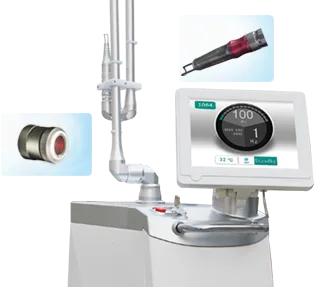
Pmise QE-01
Dual wavelengths (1064nm & 532nm) are convenient to adjust by touching LCD. Multi-spot size (1-7mm) is ideal for a wide…
View details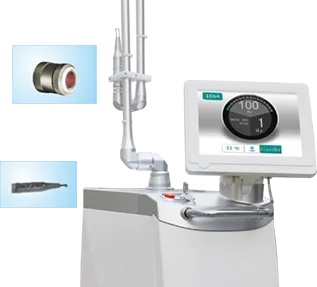
Pmise QE-02
Dual wavelengths (1064nm & 532nm) are convenient to adjust by touching LCD. Multi-spot size (1-7mm) is ideal for a wide…
View details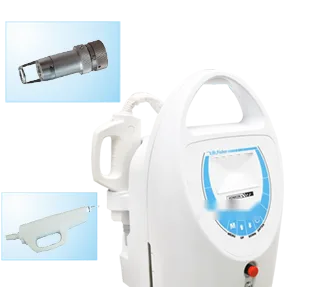
Pmise QN-05
Patented technology of single lamp and dual rods doubles energy output (400mj). Shorter pulse width (6-8ns) than ordina…
View details