
General Solutions
Acne Treatment with Blue Light, IPL and Fractional Laser: Clinical Equipment Guide
Acne is a follicular disease: oil, dead keratin and bacteria plug the pore, then inflammation does the visible damage. Clinical acne treatment pairs medical therapy with light and laser energy. Blue light and IPL calm active lesions, while fractional resurfacing works on the scars left behind. Here is how that works, and what it takes to equip for it.
What acne is, and what drives it
Four things go wrong at once, and they feed each other. Sebaceous glands push out too much oil, usually under androgen influence. The follicle lining sheds keratin faster than the debris clears. That plug seals the pore and makes a low-oxygen pocket, which suits Cutibacterium acnes. Bacteria multiply, the immune system answers, and the redness and swelling are that answer.
Our engineering archive puts the histology plainly: sebum and keratin debris block the follicular opening, sebum keeps building behind the plug, and in later stages the follicle and sebaceous gland are destroyed and replaced by fibrous tissue. That is why acne scars exist.
Most patients are 15 to 30. The face is the usual site, but ask about chest, back and shoulders. Our training archive grades acne by lesion count, from fewer than 30 lesions at grade I up to nodulocystic disease past 100 at grade IV. Grades I and II are where light-based work earns its keep; grade IV belongs with a dermatologist first.
How blue light and IPL act on active acne
The mechanism is photodynamic, not thermal. C. acnes makes porphyrins as it metabolises, and those porphyrins absorb light. Excited, they release singlet oxygen, which kills the bacteria. No photosensitiser is needed; the target makes its own. Wavelength follows the porphyrin absorption profile: our archive on light and tissue interaction lists peaks at 410, 505, 540, 580 and 630 nm, with the blue end doing most of the work. A blue-violet filter beats a general rejuvenation filter on active breakouts.
Our device manuals assign IPL bands by indication: 530 to 1200 nm for acne and rejuvenation, 585 to 1200 nm for vascular targets, 610 to 1200 nm for hair reduction. An acne filter cutting on at 430 nm is optional on several models. Broadband light has a second use: haemoglobin in the vessels feeding an inflamed lesion absorbs the green and yellow photons, so the red halo often settles before the lesion does. Selective photothermolysis, described by Anderson and Parrish in 1983, sits under both effects.
Be straight about the evidence. Clinics find it anyway.
The 2024 American Academy of Dermatology guidelines of care for acne vulgaris concluded that the available evidence was insufficient to make a recommendation for or against laser and light-based devices, microneedling radiofrequency, or photodynamic therapy in acne.
Insufficient evidence is not proof of uselessness. The trials are small, short and inconsistent, so no device can claim guideline status. Sell light as an adjunct, never a replacement.
Fractional laser for acne scars
Scars are a separate job with a separate machine. Sort what you are looking at first. Flat brown or red marks are post-inflammatory pigment and erythema, and both usually fade on their own; our post-inflammatory pigmentation page covers them. Atrophic scars (ice pick, boxcar, rolling) have lost dermal volume and need controlled wounding to rebuild collagen.
Fractional devices drill thousands of narrow columns of thermal injury and leave the skin between them intact, so healing runs outward from surviving tissue. Non-ablative erbium glass at 1550 nm heats without removing tissue: gentler downtime, more sessions. Ablative CO2 at 10600 nm vaporises tissue in each column and asks for real recovery time. Our CO2 platforms are RF-excited, with adjustable spot size and three modes (ultrapulse, continuous, fractional). For settings and patient selection, read our guide to acne scar removal with fractional laser.
One rule saves a lot of grief: never resurface a face that is still breaking out.
What a realistic course looks like
Nobody clears acne in one visit. Say so on day one, in writing. Response depends on lesion type, skin type, hormones and compliance.
| Phase | Typical approach | Spacing | What to expect |
|---|---|---|---|
| Active inflammatory lesions | Blue-band or acne-filter IPL, E-light with RF | Weekly to fortnightly at first | Fewer new pustules over several sessions; redness settles first |
| Maintenance | Reduced-frequency light plus medical therapy | Monthly, tapering | Fewer flares; relapse is normal if the drivers persist |
| Atrophic scars | 1550 nm non-ablative or 10600 nm ablative fractional | Several weeks between passes | Improvement builds over months; total erasure is not a realistic promise |
Parameters stay with the operator, not a web page. Our E-light manuals specify an 8 mm by 40 mm spot, pulse widths of 0.1 to 10 ms, shot intervals of 3 to 5 seconds and energy density of 20 to 50 J/cm². Start low for the patient's Fitzpatrick type, then titrate from what you see. Darker skin gets less energy and longer pulses. Always.
Recommended Pmise equipment
For active acne, the workhorse is a filtered IPL platform with radiofrequency support. Our HPT E-light range (PE-01 and PE-02) delivers homogeneous pulses, which matters on inflamed skin. The MF-08 multifunction platform puts acne, pigment, vascular and hair work on one trolley. No single acne laser covers both jobs, though. For scars, choose by downtime tolerance: the EF series (1550 nm erbium glass) is gentler, the CF series (10600 nm CO2 fractional) handles established scarring. Check the standard filter set, handpiece cooling, lamp or tube lifetime, and whether the settings library reaches Fitzpatrick VI.
Ask for the numbers before you commit
Tell us your patient mix and we will send the Fitzpatrick-indexed parameter protocol and spec sheet. Name the model on the contact page.
- Parameter protocol and spec sheet, Fitzpatrick-indexed, with the consumable list.
- Demo or quotation, configured for your territory and voltage.
- Certification and registration paperwork. Rules differ by country, so say where the unit will be installed.
- Warranty, spare parts and lead time, confirmed in writing with the quote.
Screening, aftercare and patient safety
Before you treat: screening and contraindications
Screen before you fire a single pulse. Our device manuals carry a contraindication list, and every unit ships with an eye shield for the patient and goggles for the operator. Both get worn, rated for the wavelength.
- Photosensitising medication. Ask what the patient takes, and ask again at each visit. Our manuals name tetracycline as the classic example. A photosensitised patient swells hard at a fluence another barely feels.
- Herpes simplex history in or near the field. Ablative fractional resurfacing opens thousands of small wounds and can wake a dormant infection. With a history, antiviral prophylaxis before the session is standard practice, prescribed by the treating clinician.
- Recent UV, sunbeds or self-tanner. Our manuals rule out treatment immediately before or after sun exposure. Tanned skin holds extra melanin and burns more easily. Fake tan does the same without the warning. Reschedule.
- Pregnancy. A contraindication across our IPL and RF manuals. Wait.
- Active infection or open lesions in the field, including severe dermatitis or eczema there.
- Keloid tendency. Fractional resurfacing is deliberate wounding. Patients who scar hypertrophically need a test area first.
- Undiagnosed lesions. Our manuals are blunt: no firm diagnosis, no treatment. Refer or biopsy when the picture does not fit. Acneiform drug eruptions, folliculitis and rosacea all mimic acne.
- Implanted devices and anticoagulation. Pacemakers rule out radiofrequency work, and our manuals list anticoagulant therapy in the previous two weeks.
After the session: aftercare and precautions
Our manuals record a counterintuitive pattern: debris surfaces two to three days after a session, then settles over the next 7 to 15 days. Clearing the white plugs in that window is forbidden. Patients pick anyway, so warn them twice.
- Strict sun protection for the whole course. Fresh inflammation plus UV is a recipe for pigment.
- Fitzpatrick IV to VI carry a higher risk of post-inflammatory hyperpigmentation. Test patch, wait, then treat.
- Simple routine afterwards: gentle cleanser, non-comedogenic moisturiser, no scrubs or acids.
- Isotretinoin needs a conversation, not a rule of thumb. The 2017 ASDS consensus concluded that evidence was insufficient to justify delaying superficial chemical peels and non-ablative lasers, including hair removal, vascular and non-ablative fractional devices, in patients currently or recently on the drug.
- Fully ablative resurfacing is a different case. The panel found the evidence too thin to recommend for or against it, so many clinicians still defer full-face ablative work. The familiar six-month wait is legacy convention from the drug labelling, not an ASDS finding. That call belongs to the prescribing clinician.
Frequently Asked Questions
How many sessions does light-based acne treatment take?
Plan for a course, not a visit. Most protocols run weekly or fortnightly at first, then taper as lesions calm down. Light does not switch off the hormones and sebum driving the disease, so maintenance and medical therapy stay in the plan.
Can IPL remove acne scars?
No, and it should not be sold that way. IPL works on colour: bacteria via porphyrins, redness via haemoglobin, pigment via melanin. Atrophic scars are structural and need a fractional device. What IPL does help is the red and brown marks left after a breakout, which patients often call scars.
Is it safe for darker skin types?
It can be, with the right settings and an experienced operator. Melanin competes for the same photons, so darker skin absorbs more energy in the epidermis and carries a higher risk of burns and lasting hyperpigmentation. Use lower fluences, longer pulses, good cooling and a test patch.
Educational material for clinics and distributors, not medical advice; it does not replace diagnosis by a qualified clinician. For a parameter protocol or a demonstration, use the contact page.
Recommended Equipment
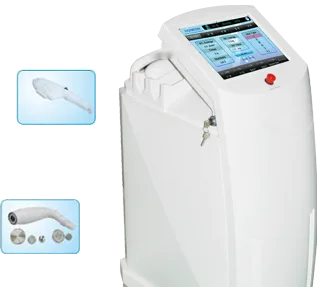
Pmise PE-01
Safe:Single pulse of HPT (Homogeneous Pulse Technology) delivers average energy and avoids the epidermis burns.Efficient…
View details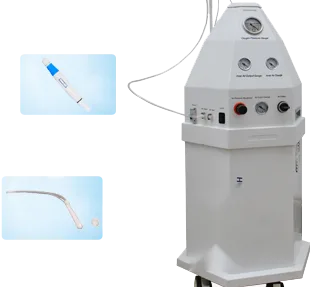
Pmise OJ-01
Cost effective.Replacement for skin care by hand.The first choice for acne clearance.Improve cosmetic absorbing through …
View details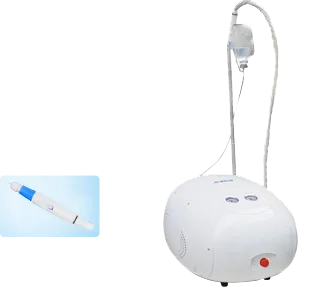
Pmise OJ-03
Cost effective.Replacement for skin care by hand.The first choice for acne clearance.Improve cosmetic absorbing through …
View details