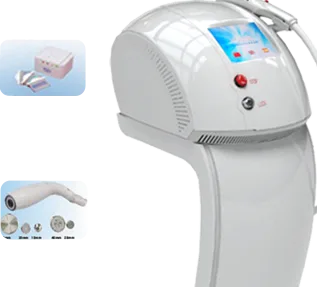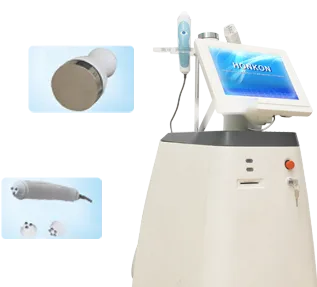
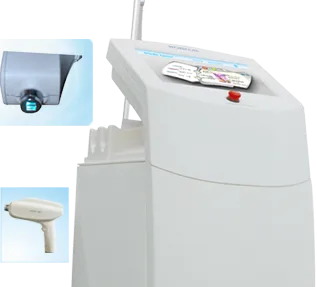
Any workable aesthetic clinic equipment list starts with one versatile core device and grows from there. Buy the machine that fills your diary in week one. Prove the demand. Then expand. Clinics that open with four platforms often end up with three parked against a wall, still on finance.
What follows is a staged plan: order of purchase, device-to-menu matching, budget lines, and the room realities that catch first-time owners out.
What belongs on the list first?
One broad-demand device. That is stage one, and for most operators the anchor is laser hair removal: bookings are steady, the protocol is fast to train, one room serves a wide mix of patients. A specialised pigment laser can wait until you are turning that work away.
Diode hair removal is the usual pick. Our device manuals put the principle plainly: an 808nm wavelength penetrates deep and is absorbed by the target chromophore, while pulse duration, energy density and epidermal cooling heat the follicle without damaging surrounding tissue. The specification page in our engineering archive for our 808nm diode hair removal platform lists a 12mm x 12mm spot, energy density from 2 to 120 J/cm2, pulse durations of 5 to 300ms and 1 to 10Hz. Those ranges matter more than they look. One console handles fine facial hair and coarse back hair, with no second machine on the invoice.
Want to sell more than hair removal on opening day? An IPL-plus-RF console is the other credible anchor. Our guide to multifunction beauty equipment covers the cases where one platform genuinely beats three dedicated ones.
How do you match devices to a treatment menu?
Work backwards from the menu. Every device should map to a named service with a price and a realistic session count before you sign anything. The physics behind that matching is selective photothermolysis, described by Anderson and Parrish in Science in 1983: a pulse of light absorbed preferentially by a chosen target, short enough to confine the heat, damages it and spares what sits around it. Different targets, different wavelengths. That is why a device mix exists rather than one universal box.
The table below is deliberately conservative. Its third column restates only what our own manuals say.
| Device category | Menu supported by the archive note | Technical basis stated in our archive |
|---|---|---|
| 808nm diode hair removal platform | Face and body hair reduction, sold in courses | 808nm absorbed by the target chromophore, with epidermal cooling protecting the skin surface |
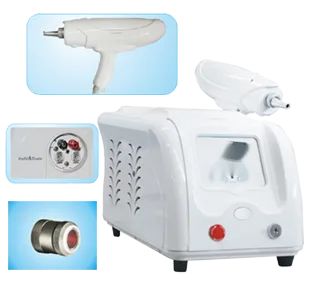
| Q-switched Nd:YAG laser | Tattoo removal, freckles and other benign pigmented lesions | 1064nm infrared plus visible 532nm green output; very short pulses fragment pigment for clearance by the lymphatic system |
| IPL combined with radiofrequency | Skin rejuvenation, broken capillaries, wrinkle softening | Optical energy initiates collagen rebuilding and clears broken capillaries and pigmented lesions; RF excites dermal water molecules, reaching 45 to 65 degrees Celsius, which contracts collagen |
| Ultrasonic cavitation with RF | Body contouring through subcutaneous fat reduction | 40kHz low-frequency ultrasound has its greatest effect on hypodermis fat tissue; 60W ultrasonic output, air-cooled |
One caveat on that last row. Cavitation platforms are also widely marketed for cellulite and stretch-mark improvement. Treat those as marketed applications, not documented device physics: results vary by patient, body area and protocol, so word your pricing that way. Our comparison of cavitation, cryolipolysis and RF body contouring sets out what each technology is genuinely good at.
A Q-switched Nd:YAG laser earns its slot once tattoo and pigment enquiries turn real. Our archive manual for that class of laser notes that the pulses break pigment into particles small enough for the body to clear through the lymphatic system, with treatments roughly a month apart for best results. Sell it as a course. Patients who expect one visit leave disappointed, and disappointed patients do not refer.
What does a staged buying plan look like?
Three stages, each triggered by booking volume rather than ambition. A stage should pay for itself before the next one begins.
- Stage one, the anchor. A single hair removal or IPL/RF platform. This is your volume engine and your training baseline. Run it until the room is reliably busy on weekday afternoons, not just Saturdays.
- Stage two, the expansion. Add pigment or resurfacing capability once you are refusing tattoo, freckle or texture work. A Q-switched Nd:YAG or a fractional device lifts your average ticket without needing new patients.
- Stage three, the differentiator. Body contouring or a combined light-and-RF console for cross-sells and seasonal spikes. A multifunction IPL and RF platform or a cavitation body contouring system rounds out the menu once the first two stages hold up.
Resist buying stages two and three up front, however good the package discount looks. Idle equipment locks up cash and floor space, and a machine nobody uses still needs a service contract. Browse the Pmise product range to see how the stages map onto real platforms.
What does the equipment budget actually cover?
The machine price is the headline, not the total. Build-out, installation, training and compliance stack on top, and consumables plus servicing keep billing you for as long as you own the device. Prices swing by model and market, so plan around relative sizes, not a forum number.
| Cost item | Relative weight | When it lands | Commonly underestimated? |
|---|---|---|---|
| Device hardware, spare handpieces and tips | Largest single line | One-time | No |
| Room build-out: circuits, water, drainage, climate control | A sizeable fraction of hardware cost, steeper for water-cooled lasers | One-time | Yes |
| Delivery, installation and commissioning | Modest, not trivial | One-time | Sometimes |
| Training, certification and licensing | Front-loaded, with refreshers | Mostly one-time | Sometimes |
| Consumables: cooling water, lamp or diode life, gels, tips | Scales with treatment volume | Recurring | Yes |
| Service contract, spares and backup capacity | Ongoing | Recurring | Yes |
Two lines cause most of the pain: build-out overruns on water-cooled machines, and consumables nobody modelled. Our diode manual lists substandard water quality among the faults the interface reports, and says to stop and check rather than push on. Small jobs. They repeat for the life of the machine. Eyewear and insurance sit in the same forgotten column. For payback maths, our breakdown of aesthetic laser ROI for clinics covers utilisation and break-even.
One judgement, stated flatly: a high-utilisation device at a fair price beats an impressive one you run twice a week. Total cost of ownership decides which quote is cheaper.
Plan the room before you sign the purchase order
Electrical supply, cooling and ventilation are far harder to retrofit than a machine is to wheel in. Sort the room first. The gap between device classes is wider than most buyers expect.
Two ends of the range from our own documentation. The 808nm diode platform is a water-cooled floor unit at roughly 730 x 470 x 970mm and about 85kg gross, drawing 2200W with up to 600W of laser output, and its cooling unit must run for several minutes before the laser is switched on. The cavitation unit is another animal: 40kHz ultrasound, air-cooled, 12kg net, roughly 450 x 400 x 350mm. One needs a plumbed, ventilated, properly circuited room. The other needs a trolley and a socket.
Check that the power supply matches the machine's technical parameters before installation, not after delivery. Our manuals also specify an earthed three-pin connection, and the diode documentation gives a comfortable working temperature range of roughly 18 to 26 degrees Celsius for the machine itself.
Safety planning runs on the same timeline. Q-switched systems in our archive are documented as Class 4 laser products needing eyewear across the 200 to 1080nm range, since the 532nm output is visible green and the 1064nm beam is invisible infrared. ANSI Z136.3, the American National Standard for safe use of lasers in health care, calls for a laser controlled area for Class 3B and Class 4 systems with signage at every entrance. US-bound devices must also meet the FDA performance standard at 21 CFR 1040.10. Our post on clinic laser safety essentials goes deeper.
- Electrical: confirm voltage, phase and a dedicated circuit per device. Never share a laser circuit with the sterilizer.
- Cooling and water: pure or distilled water, periodic changes, a level surface, drainage access.
- Footprint: clearance for handpiece reach, the bed, and an operator moving around the patient.
- Room fabric: no mirrors or reflective surfaces in the beam area, climate control, signage at the door.
- People: eyewear for patient and operator, documented training, a named laser safety officer.
Does the plan change if you are a distributor?
Yes, and the shift is in what you optimise for. A clinic optimises utilisation of a few rooms. A distributor optimises a range that stays supportable after the sale: shared handpieces and spares across models, training material in your buyers' languages, a manufacturer who still answers technical questions three years later. A wide catalogue of unrelated machines looks impressive in a brochure and turns brutal the first week three customers need different parts. Our clinic and distributor solutions pages are structured around that.
Whether you fit out one room or supply fifty, the discipline is identical. Buy the core, prove the demand, expand the device mix into a menu your market will pay for.
Frequently Asked Questions
What is the single best first device for a new clinic?
For most new clinics, a hair removal platform is the strongest opening buy. Demand is steady, the protocol is quick to teach, and one room serves many patients across repeat visits, which builds cash flow while your reputation forms. A diode system pairing an 808nm wavelength with epidermal cooling gives forgiving operation and predictable bookings.
Should I buy a multifunction platform or separate devices?
Choose a multifunction console when your menu is broad but your space, budget and patient volume are still modest, since one footprint sells several services. Switch to dedicated machines once one service becomes a genuine profit centre. A specialised device usually gives better throughput, better uptime and fewer scheduling clashes than a shared platform everyone wants at 4pm.
How many rooms and devices do I need to open?
One or two treatment rooms and a single core device is a normal, healthy start. Lean openings keep idle equipment from draining working capital. Add the second device only when the first is booked across the full week, and size later purchases against demand you can measure in your own calendar, not demand you hope to create.
Why do tattoo and pigment treatments need several sessions?
Q-switched lasers fragment tattoo and pigment particles into pieces small enough for the body to clear through the lymphatic system, and that clearance takes weeks. Our archive manual notes that sessions about a month apart give the best results. Price the service as a package so patients understand the timeline. Outcomes vary with ink type, depth and skin type.
Pmise Technical Team. We manufacture laser and light-based aesthetic equipment and help clinics build device line-ups they can service and fill.