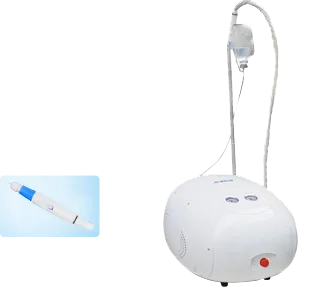
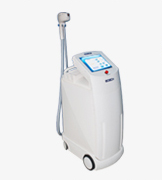
Hydra peel vs water oxygen jet comes down to one thing: suction or spray. A hydra peel lifts debris out of the pore with vortex vacuum and liquid serums. A water-oxygen jet drives a fine mist of gas and fluid in. HydraFacial is a branded, patented version of the suction method. Your real buying decision is consumable cost and positioning, not physics.
Hydra peel vs water-oxygen jet: what is actually different?
Suction versus spray, and that drives everything else. A hydra peel machine runs a spiral tip across wet skin and uses vacuum to pull loosened sebum and dead cells out of the follicle, feeding serum in as it passes. A water-oxygen jet works the other way round: it atomises saline or nutrition liquid with pressurised gas and fires that mist at the skin fast enough to flush a blocked pore open. HydraFacial sits on the suction side, wrapped in a trademark and a closed consumable system.
All three are non-ablative and gentle enough for a lunchtime appointment. They split on what you buy every month to keep them running. One line to remember: hydra peel and HydraFacial pull, the jet pushes. Everything else follows.
How does a hydra peel work?
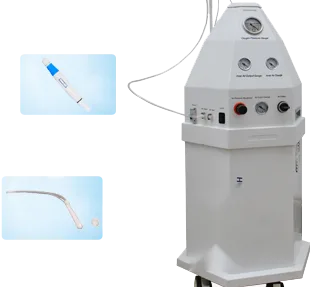
A hydra peel exfoliates and hydrates in one pass, using water, a mild acid solution and controlled vacuum instead of crystals or blades. Our engineering archive documents it as a four-step routine, still the sequence operators are trained on across our hydra peel line:
- Cleanse and exfoliate. Dead surface cells come away.
- Acid peel. A gentle solution loosens debris inside the pore without irritating skin around it.
- Extraction. Vortex suction lifts the loosened material out. No squeezing, no needles.
- Hydration. Antioxidants and hyaluronic acid go back in while the pore is clear.
Suction strength is the setting that matters most in the treatment room. Our device manuals rate vacuum pressure across the hydra peel platform at roughly 250 to 600 mmHg. That's real room to move between a nervous first-timer and a congested, oily T-zone. Manufacturer figures, quoted at family level, so confirm them against the spec sheet for the configuration you buy. That documentation also splits cleansing and infusion across two handpieces, CF01 and IN01, keeping each step repeatable when three therapists share one machine.
Does the skin measurably change? At the surface, yes. Razi and colleagues, in Skin Research and Technology in 2024, imaged volunteers before and after hydradermabrasion using line-field confocal optical coherence tomography and saw the stratum corneum come out thinner straight after treatment. Eight volunteers only. Confirmation of the mechanism, not proof of a lasting result.
How does a water-oxygen jet work?
A water-oxygen jet cleans by kinetic force: pressurised gas atomises liquid into microdroplets and accelerates them into the skin. That physics sits in peer-reviewed literature. Golan and Hai, writing in Annals of Plastic Surgery in 2005, described a jet peel device producing a two-phase stream of gas and saline microdroplets at very high velocity for gentle cosmetic peeling, and noted the same stream can carry dissolved substances into the skin. They reported it as safe and effective for the usual peeling indications in their patient group.
Specs in our archive match that description. Our water-oxygen jet manuals rate spray speed above 200 m/s with droplets under 80 microns, delivered with a 0.9% sodium solution and nutrition liquid; the series leaflet quotes a peak of 230 m/s. Output air pressure sits in a documented 0.3 to 0.6 MPa band, adjusted to the area, with a full-face session listed at around 20 minutes. Vendor-stated parameters at series level, not independent test results.
One design detail matters more commercially than any of those numbers. Across our water-oxygen jet series the air source sits separate from the cabinet, so the machine runs when there's no oxygen tank on site. Our documentation also pairs the series with RF, IPL or E-light platforms for a deep clean around treatment. Selling into markets where medical oxygen supply is patchy? That's no footnote. The archive puts this family at acne, congestion and oily skin, plus texture and post-treatment nourishment. Keep your claims there and you're on firm ground.
Where does HydraFacial fit?
HydraFacial is a productised hydra peel, and you're buying brand recognition as much as hardware. According to the company's own EMEA materials, the treatment runs through detox, cleanse and peel, extract and hydrate, fuse and protect, then an LED step, using a patented Vortex-Fusion system with HydroPeel tips that dislodge impurities while delivering hydrating solutions. That patent is what the company presents as its separation from other hydradermabrasion procedures.
Worth the lock-in? For a city medspa whose clients ask for the treatment by name, often yes. In a market where nobody knows the name, you're paying for recognition you never receive, on tips and vials you can't shop around for.
Consumables, throughput and spa positioning compared
Running cost separates these three far more than treatment quality does. Session length is similar, so margin per chair-hour is decided by what you feed the machine. No supplier can quote a cost per session in the abstract, so here's the arithmetic. Run it once per platform and the comparison stops being a hunch.
Cost per session = (tip or nozzle price / validated uses per tip) + (serum ml per face x price per ml) + (saline or solution ml per face x price per ml) + gas or compressed-air cost per session + (annual spare parts and service / your annual session count)
Then stretch it: three-year consumable spend = cost per session x sessions per week x 52 x 3. Do that before comparing purchase prices. In a busy salon running back-to-back express facials, the three-year consumable line routinely outweighs the price gap on the invoice.
| Factor | Hydra peel (vortex) | Water-oxygen jet | HydraFacial (branded) |
|---|---|---|---|
| Tip or nozzle | Spiral tip, open market | Nozzle, open market | Proprietary tip, single source |
| Serum or active | Open market, your choice | Nutrition liquid, open market | Proprietary vials, single source |
| Base fluid and gas | Water and mild acid, no gas | Saline plus oxygen or compressed air | Vendor protocol, no gas |
| Most volatile line item | Serum price, if you chase premium actives | Local oxygen supply and refill cost | Tip and vial pricing, one vendor sets it |
| Supplier lock-in | Low | Low | High |
| Typical session | Express facial slot | About 20 minutes full face (manufacturer figure) | Express facial slot |
| Strongest indication | Deep cleanse, hydration, texture | Acne, congestion, oily skin | Premium express glow facial |
| Positioning | Value hydra facial, your own menu | Clinical oxygen therapy | Brand-name premium service |
Ask every supplier for these five numbers in writing:
- Price per tip or nozzle, and validated sessions before replacement.
- Millilitres of serum, and of saline or nutrition liquid, per full-face session.
- Oxygen or compressed-air use per session, and whether a tank is mandatory in your market.
- Handpiece service life and today's replacement price, not "available on request".
- Any minimum annual consumable purchase tied to pricing, warranty or territory rights.
Two of those five barely exist for a branded closed system: the answer is whatever the brand charges next year. That's the real cost of lock-in, and why open platforms usually win the three-year sum. Our notes on running costs apply the same method to laser equipment. Utilisation is the other number buyers underestimate: a jet platform that preps skin before IPL or RF earns its floor space twice a day.
Which machine should your spa choose?
Pick on margin model and client mix, not on whichever demo looked slickest at the trade show.
- Choose a hydra peel if you want the vortex glow-facial experience with open consumables and freedom to source your own serums.
- Choose a water-oxygen jet if acne, congestion and oily skin are your bread and butter, or you want an oxygen-infusion story.
- Consider branded HydraFacial only where the name drives bookings and you accept proprietary consumable pricing for the life of the machine.
- Distributors: one hydra peel line plus one jet line covers most of the demand a branded platform does, at a price your clinics can finance.
Get the spec sheets and a quotation
You have the method. Now you need numbers to feed it. Ask us for current spec sheets and pricing on the Pmise hydra peel and water-oxygen jet lines, and we'll send consumable prices with them, so your cost-per-session model takes an afternoon. Tell us your market and monthly volume on the contact page and request a quotation or a distributor pack.
Whether you buy from us or from someone else, pin these terms down in writing before a deposit leaves your account:
- MOQ. Single unit for a clinic, or a mixed container? Confirm how price tiers move with quantity.
- Lead time. Production plus shipping in working days from payment, including OEM branding if you want your own label.
- Warranty term. How long on the cabinet, how long on the handpiece, and what sits outside the cover. Consumable-contact parts are usually treated separately.
- Spare handpieces and consumables. Stock availability, unit price, and how many years the supplier will support the model. Our notes on warranty and spare parts list the clauses worth arguing over.
- Training and documentation. Protocol sheets, parameter tables, English manuals, operator training, and the paperwork customs will ask for.
Frequently Asked Questions
Is a hydra peel the same thing as a HydraFacial?
They share the vortex principle of suction plus liquid serums, but HydraFacial is a trademarked platform with patented tips and proprietary vials. A generic hydra peel gives a comparable exfoliate-and-infuse treatment on open-market consumables. The real differences are brand recognition, licensing and running cost.
Does a water-oxygen jet really push anything into the skin?
Peer-reviewed work supports the mechanism. Golan and Hai, in Annals of Plastic Surgery in 2005, described a two-phase stream of gas and saline microdroplets at high velocity that peels skin gently and can carry dissolved substances into it. Treat deeper physiological claims with caution and check any device figure against current supplier documentation.
Which option is cheapest to run?
Open systems, almost always. A hydra peel and a water-oxygen jet let you buy serums, saline and nutrition liquid on the open market, while a branded platform ties you to its own tips and vials. Put supplier quotes into the formula above, multiply by realistic weekly volume, compare over three years. Consumables decide your margin, not purchase price.
Can these machines replace IPL or laser treatments?
No. Hydra peel and water-oxygen jet systems are cleansing and hydration tools. They don't target pigment or vascular lesions the way a laser does. Clinics use them alongside light-based devices, preparing or soothing skin around IPL, RF or E-light, not as a substitute.
Pmise Technical Team. We manufacture laser and light-based aesthetic equipment for export clinics and distributors, and describe our devices from original engineering documentation cross-checked against cited peer-reviewed sources.