
Anti-aging
Non-ablative Skin Resurfacing
Non-ablative skin resurfacing rebuilds collagen inside the dermis using heat, while the epidermis stays intact. A 1550nm fractional laser sinks columns of controlled thermal injury below the surface, the skin repairs them over the following weeks, and texture improves gradually with low downtime.
What non-ablative skin resurfacing is
Remodelling without removal. Ablative lasers vaporise the epidermis and let new skin grow from the wound bed. Non-ablative devices do the opposite: they push energy through an intact stratum corneum and deposit it deeper, in the dermis. The barrier never opens, and that one difference drives everything else. Short recovery, milder discomfort, a series of sessions.
The word "fractional" carries equal weight. Rather than treating a whole surface at once, the beam is split into a grid of microscopic treatment zones, with healthy untreated skin between every column. That reservoir of intact tissue makes healing quick. Manstein and Anderson's group published the concept in 2004, using prototypes at roughly 1.5 micrometres.
Why aim at the dermis? That's where ageing shows first. The dermis runs roughly 0.5mm to 4mm thick by body site, and collagen fibres make up around 80 percent of its fibrous content, per the skin science training material in our engineering archive. Sun and time degrade that scaffold.
How a 1550nm fractional laser does the work
Water is the target. At 1550nm the absorbing chromophore is tissue water, not melanin or haemoglobin, so epidermal pigment is largely bypassed on the way down. That's why this wavelength travels better across a range of skin tones than a pigment-hungry one. It isn't a licence to be careless with darker skin. It does widen the margin.
A computer graphic generator scans the focused beam across a treatment block and fires a lattice of micro-spots. Our device manuals for the erbium glass fibre range give a focal spot range of 50 to 2000 micrometres, pulse widths of 0.067ms to 6.7ms, and micro-holes about 0.12mm across reaching roughly 2mm deep. Density is set as a grid per square centimetre: 6x6, 12x12 or 24x24, meaning 36, 144 or 576 spots per square centimetre. Those settings give fractional coverage of about 1.56 percent, 6.25 percent and 25 percent. Low density, gentle session. High density, stronger remodelling and a bigger reaction.
Keep those two numbers separate. Density is always quoted per square centimetre; the scan block is the square the scanner paints. Multiply them for the total spot count. A 2.0x2.0cm block at 12x12 spots per square centimetre covers 4 square centimetres and fires 576 spots overall, still 144 per square centimetre. Sort that out before anyone touches the energy dial.
Inside each column, heat does two jobs. Moderate heating makes collagen fibres contract, and the training literature in our archive puts that immediate contraction at roughly 60 to 65 degrees Celsius, where fibres shorten and thicken while surrounding structure stays intact. Push past 75 degrees for long enough and you get necrosis, which is what this category exists to avoid. The second job is slower. Each micro-injury triggers the ordinary healing cascade, and fresh collagen is laid down over weeks. No honest operator promises an instant result.
Treatment protocol and what to expect
Settings differ by operator, indication and region, so read the table as orientation rather than prescription. Full-face work in our archive applies topical anaesthetic for about 15 to 20 minutes, and a pass runs one to two hours including preparation. Our manuals warn against over-anaesthetising: the patient's report of tingling and tightness is one endpoint an operator reads.
| Item | Typical working range | Practical note |
|---|---|---|
| Wavelength | 1550nm erbium glass fibre | Water-targeted, epidermis spared |
| Scan block (area) | 1x1cm, 2x2cm or 3x3cm squares; facial protocols mostly use 2.0x2.0cm | Total spots = density x block area. Small blocks near eyes and mouth |
| Spot density | 6x6, 12x12 or 24x24 grid per cm2, meaning 36, 144 or 576 spots/cm2 | Protocols mostly use 12x12 or 24x24 per cm2. Start low on darker skin |
| Fractional coverage | About 1.56% at 36 spots/cm2, 6.25% at 144 spots/cm2, 25% at 576 spots/cm2 | Untreated skin between columns is what shortens healing |
| Focal spot and depth | 50 to 2000 micrometres; micro-holes about 0.12mm wide, 2mm deep | Smaller spot, deeper column |
| Pulse energy | Roughly 10mJ to 50mJ per zone in the facial protocol | Eyelid and forehead below cheek or scar |
| Pulse interval | 1ms in the working protocol, adjustable to 100ms | Spacing limits heat build-up |
| Sessions | Around three to six, spaced from days to about three weeks | Varies by indication |
| Downtime | Short. Redness and mild swelling usually settle within a day | Fine roughness lasts a few days longer |
| Visible change | Gradual, over weeks to months | Remodelling is not immediate |
What does the patient feel? Prickling heat during the pass, then warmth like mild sunburn. Redness and slight swelling follow, usually calming within 24 hours. For a few days the grid feels rough, like fine sandpaper, and faint darkening at the spot sites typically fades within ten days.
Who it suits, and when ablative is the better call
- Good fit: mild to moderate photoaging, rough texture, enlarged pores, fine lines, atrophic acne scars, stretch marks, patients who cannot take a week off.
- Poor fit: deep static wrinkles, severe or ice-pick scarring, anyone expecting a one-session transformation.
- Postpone or refer: filler in the treatment field, botulinum toxin or radiofrequency within the past week, ablative resurfacing within the past month, active infection, keloid tendency, pregnancy, any unexplained or changing lesion.
Ablative resurfacing removes tissue and gets further per session. It costs real recovery time and carries a heavier complication burden. Non-ablative work trades depth for safety. Plenty of clinics run both and choose per case. For the full comparison, read our breakdown of ablative versus non-ablative fractional laser treatment, plus the companion page on ablative skin reconstruction.
Recommended Pmise equipment
Our 1550nm platforms sit in the erbium glass fractional laser (1550nm) category. Fibre output comes at 10W, 20W and 30W, so a clinic sizes the machine to its caseload. Our 1550nm erbium glass fractional laser buying guide goes deeper on optics.
- Interchangeable optics: a fixed-focus cone for the smallest spot and deepest columns, a zoom cone for shallower or deeper work, and a roller-type tip for periorbital and perioral areas.
- Adjustable scanning pattern, spot density, spot count and block area, so the grid fits the anatomy.
- Pulse energy adjustable in 2mJ steps up to 200mJ, with a 635nm aiming beam rated at 5mW or less.
- Pulse width from 0.067ms to 6.7ms, matched to the target's thermal relaxation time.
- Air cooling and a touch interface built for daily clinic use.
Weigh consumable cost, spare handpiece availability and local regulatory paperwork too. Those decide cost of ownership more than headline wattage does.
Aftercare and precautions
Aftercare is where outcomes are won or lost. Our archive protocols are strict about heat and friction.
- No hot water on the face for 72 hours. Cool washing only, gentle cleanser.
- Skip other beauty treatments while the skin settles.
- Do not scratch. Itching in the first few days is normal, but scratching invites trouble.
- No exfoliation, scrubbing or massage, and no irritating or alcohol-heavy cosmetics. Our manuals link that handling directly to post-inflammatory pigmentation.
- Rehydrate over the next three to seven days with a bland moisturising serum.
- Avoid direct sun. Ultraviolet exposure raises matrix metalloproteinase activity, degrading the collagen you just paid to rebuild. SPF15 or higher from around day three, stricter if the patient pigments easily.
- Excessive swelling, blistering or crusting goes back to the physician.
Two risks deserve explicit mention. Post-inflammatory hyperpigmentation is the main one, and it climbs with darker Fitzpatrick types, aggressive density settings and poor sun discipline afterwards. Test a conservative area first. The second risk is diagnostic. Pigmented or vascular lesions that are changing, asymmetric or unexplained need a dermatological opinion, sometimes a biopsy, before any laser is switched on. Resurfacing a lesion that should have been assessed is a serious error.
This page is educational material for clinics, physicians and distributors evaluating equipment. It is not medical advice and does not replace the judgement of a qualified practitioner.
Frequently Asked Questions
How many sessions does non-ablative skin resurfacing need?
A series, not a single visit. Schedules in our archive commonly run three to six sessions, spaced from several days to about three weeks depending on indication and density. Textural refinement usually needs fewer passes than atrophic acne scarring. Set expectations at consultation, take standardised photographs, and review progress before promising more.
Is 1550nm fractional treatment safe for darker skin?
It's used across a wide range of skin types because water, not melanin, absorbs the energy. Caution still applies. Higher Fitzpatrick types carry greater risk of post-inflammatory hyperpigmentation, so start at low density and modest energy, test a discreet area, and be firm about sun protection. Skin-type risk is a settings problem more than a wavelength problem.
What is the real difference between this and CO2 fractional resurfacing?
Depth and downtime. A 10600nm CO2 fractional laser ablates tissue columns and delivers more change per session, with visible recovery measured in days to weeks. A 1550nm non-ablative device heats without removing the epidermis, so recovery is short but progress is incremental. Neither is universally better. Match the device to the patient's tolerance for downtime and the severity of the indication.
Can it fix deep wrinkles or severe scarring?
Realistically, no. Non-ablative fractional work suits mild to moderate photoaging, texture, enlarged pores and atrophic scarring. Deep static rhytides and severe scarring usually call for ablative resurfacing, combination therapy, or a surgical opinion. Overselling this category is the fastest route to unhappy patients, so be candid at consultation.
Recommended Equipment
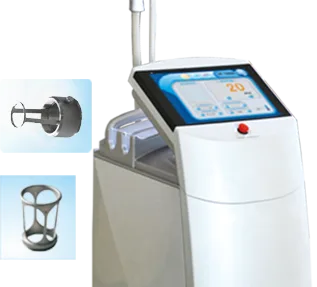
Pmise EF-02
The target tissue is water, no skin type limit (Fitzpatrick I-VI). The output spot diameter is 50-80 um, less thermal ab…
View details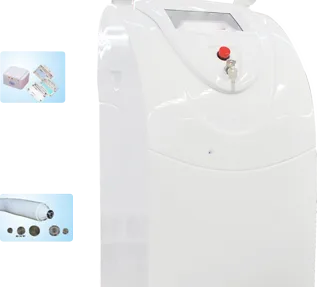
Pmise MF-06
1.LCD display, touch screen input, and friendly human-computer interface.2.IPL, RF and ND YAG laser are well united in o…
View details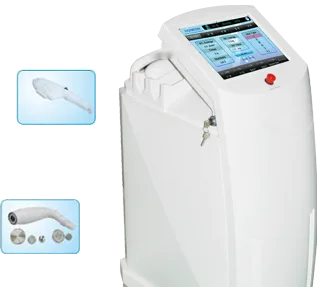
Pmise PE-01
Safe:Single pulse of HPT (Homogeneous Pulse Technology) delivers average energy and avoids the epidermis burns.Efficient…
View details