
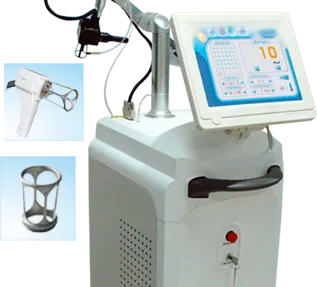
Ultrapulse CO2 Fractional Laser (10600nm)
Pmise CF-05
- Low cost effective,
- Easy maintenance
- Elegant and beautiful design.
- High effective ventilation enables the operation around-the-clock.
- Fractional laser penetrates skin and forms tiny thermal channels.
Overview
The Pmise CF-05 is a fractional CO2 laser built for professional skin resurfacing and scar revision in clinics and medical aesthetic practices. It operates at the 10600nm wavelength and delivers energy through a scanning fractional pattern, so trained operators can treat aging skin, acne and surgical scars, enlarged pores, and pigmented lesions with a single platform. As a member of Pmise's Ultrapulse CO2 Fractional Laser (10600nm) line, the CF-05 is aimed at buyers who want a versatile ablative device rather than a single-purpose machine.
Beyond fractional resurfacing, the system also supports continuous-wave and ultrapulse modes, which lets surgeons use it for minor cosmetic-surgery tasks such as lesion removal and incisions. This mode flexibility is the main reason distributors position it as a workhorse for busy treatment rooms. If you are comparing platforms, our guide on how to choose a fractional CO2 laser walks through the trade-offs in plain terms.
It is professional medical equipment intended to be operated by trained clinicians who follow proper patient selection, safety, and post-care protocols.
How It Works
The CF-05 works on the principle of selective photothermolysis: at 10600nm the laser energy is strongly absorbed by water, which is the dominant chromophore in skin tissue. Because skin is mostly water, the beam deposits its energy in a very shallow layer and heats it quickly, which is what makes a CO2 laser an efficient ablative tool.
In fractional mode the beam is split into a grid of tiny spots by a scanning pattern generator, so only a fraction of the treatment area is touched at once. Each spot forms a narrow micro-channel of ablated and coagulated tissue while the skin immediately around it is left intact. The Pmise knowledge-base manual describes these channels as roughly 0.12mm across, reaching into the dermis, with the surrounding untreated tissue acting as a reservoir that drives fast healing.
That intact tissue is the key to the technology. It carries the wound-healing response through its inflammation, proliferation, and remodeling phases, prompting new collagen to form and existing collagen to contract. As the dermal framework rebuilds, skin tightens and the texture of scars and photo-aged skin improves. Compared with mid-infrared fractional systems, the CO2 wavelength produces more thermal coagulation and collagen contraction, which is why it is favored for deeper resurfacing and scar work. Adjustable pulse settings let the operator match the energy to the tissue being treated.
Applications
The CF-05 is suited to clinics and distributors serving dermatology, medical aesthetics, and minor cosmetic surgery. Typical applications include:
- Fine lines, wrinkles, and general skin resurfacing and tightening
- Scar revision, including acne scars, surgical scars, and burn scars
- Enlarged pores and rough, photo-aged skin texture
- Pigmented lesions such as freckles, age spots, and sun spots
- Stretch marks and loose, lax skin
- Minor cosmetic-surgery uses in continuous-wave and ultrapulse modes, such as lesion and skin-tag removal and precise incisions
Scar treatment is one of the most common reasons buyers choose this platform; see our scar treatment solution for how it fits into a clinic's service menu. Patient suitability, skin type, and contraindications must be assessed by a qualified operator before treatment.
Key Advantages
- Versatile modes: continuous-wave, ultrapulse, and fractional output in one device, so a single platform covers resurfacing, scar work, and minor surgery.
- Precise fractional delivery: a scanning pattern generator places spots accurately and lets the operator vary spot density and treatment area for different indications.
- Adjustable energy control: tunable pulse settings help the clinician tailor depth and thermal effect to the tissue and reduce unnecessary damage to surrounding skin.
- Continuous operation: effective ventilation and combined air and water cooling support long, back-to-back treatment sessions in a busy clinic.
- Practical ownership: straightforward maintenance and a design intended for daily clinical use, which matters to distributors thinking about total cost of ownership.
Specification
| Laser Type | Glass Tube CO2 Laser |
|---|---|
| Wavelength | 10600nm |
| Focal Spot Number | 6x6, 12x12, 24x24 |
| Output Power | 30W |
| Laser Operating Mode | CW, UP, CPG |
| Pulse Width | 0.067ms-0.67ms |
| Spot Size | 150μm-500μm |
| Scanning Mode | Sequential / Randomized Scanning |
| Pulse Power | 2mj-200mj |
| Pulse Interval | 1ms-100ms (Step 1ms) |
| Spot Graphic | Triangle/ Square/ Rectangle / Rhombus / Round/ Line |
| Beam Delivery | 7-joint arm |
| Spot Density | 6x6 spots/cm², 12x12 spots/cm², 18x18 spots/cm², 24x24 spots/cm² |
| Scan Area | 1 cm x1 cm, 2 cm x2 cm, 3 cm x3cm |
| Insurance Standard | Max10A |
| Cooling | Air& Water |
FAQ
What conditions is the Pmise CF-05 used for?
It is used mainly for skin resurfacing and scar revision. Clinicians apply it to fine lines and wrinkles, acne and surgical scars, enlarged pores, uneven texture from photo-aging, and certain pigmented lesions. In continuous-wave and ultrapulse modes it also handles minor cosmetic-surgery tasks such as lesion removal. Actual indications should always be confirmed against local regulatory clearance and the operator's clinical judgment.
Which skin types can be treated?
Ablative CO2 resurfacing suits many patients, but darker skin types carry a higher risk of post-inflammatory pigment change and need conservative settings and careful patient selection. The operator should assess skin type, medical history, and contraindications such as recent isotretinoin use, keloid tendency, active infection, or immunosuppression before any session. This is professional equipment and requires trained clinical judgment.
How many sessions are needed?
The number of sessions depends on the indication, the depth treated, and how the patient heals. Lighter resurfacing may need several spaced sessions, while deeper scar work is sometimes done in fewer, more aggressive treatments. Because outcomes vary between patients, we describe results qualitatively rather than promising a fixed number. The treating clinician sets the plan and the intervals between sessions.
What about training and warranty?
Pmise supplies the CF-05 as professional equipment and supports buyers with product documentation and operator guidance so clinical staff can use it safely. Warranty and training arrangements are agreed as part of the purchase, and distributors can discuss specific terms with our team. We recommend that only trained operators run the device and follow proper safety and post-care protocols.
More in Ultrapulse CO2 Fractional Laser (10600nm)
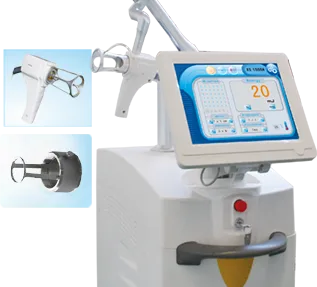
Pmise CF-01
Three output modes: CW, UltraPulse and Fractional.The COHERENT RF-excited metal laser system enables the output quality …
View details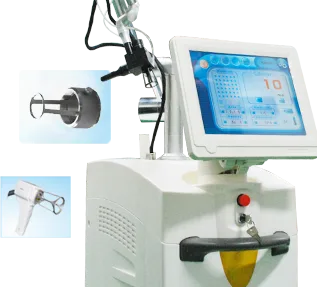
Pmise CF-02
Three output modes: CW, UltraPulse and Fractional.The COHERENT RF-excited metal laser system enables the output quality …
View details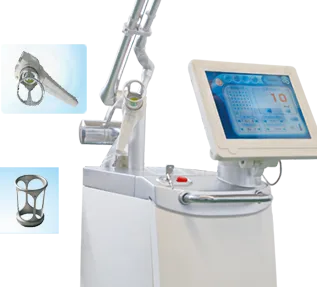
Pmise CF-03
Three output modes: CW, UltraPulse and Fractional.The COHERENT RF-excited metal laser system enables the output quality …
View details